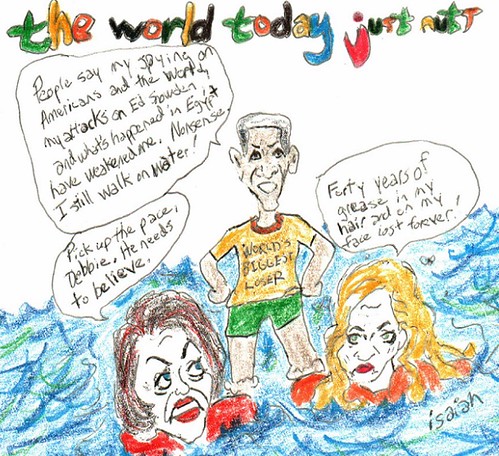
A new wave of camouflage is underway at the Pentagon and the CIA. The bin Laden “death files” contained in the Pentagon’s data bank have become the object of controversy.
Navy Vice Admiral William McRaven has been entrusted in removing these secret military files concerning the May 2011 Navy SEAL raid on Osama bin Laden’s alleged hideout in Abbotabad, Pakistan from the Pentagon’s data banks.
The files of the bin Laden SEAL operation had to be removed to sustain the Big Lie. Osama was allegedly killed on the orders of the US government, despite ample evidence that he was already dead at the time of the attack:
… the US government pulled off one of the most audacious stunts of the 21st century, when on May 2nd 2011 they claimed to have killed Osama bin Laden during a Navy SEAL operation in Abbottabad, Pakistan. The contemptuously sloppy story spun by the US government, parroted without question by the controlled corporate media, and obligingly swallowed by a largely gullible Western public, was dubious in the extreme. (Brit Dee, Global Research, May 03, 2012)
Who was killed? Was it Osama bin Laden or someone else?
Those are questions worth asking.
I really have to wonder what the government's done this time?
It's one lie after another from them.
Closing with C.I.'s "Iraq snapshot:"
Tuesday, July 9, 2013. Chaos and violence continue, Iraq gears up for
the World Cup match tomorrow, Stuart Bowen wraps up his time with the
SIGIR by talking about everything except Iraq, the State Dept can't stop
obsessing over Ed Snowden, the defense stage of Bradley Manning's
court-martial has begun, and more.
The useless Special Inspector General for Iraq Reconstruction Stuart Bowen is thankfully heading out the door. What a useless disappointment he became. Appearing before the House Foreign Affairs Subcommittee on the Middle East and North Africa this morning, Bowen, in his usual pompous manner, insisted at one point, "There was no one in charge in Iraq specifically for the rebuilding program and when the Commission Wartime Contracting on Afghanistan held a hearing and called . . ." Excuse me, you are over Iraq or Afghanistan?
That's right, Iraq. So why don't you stick to the topic?
The reality is that they're closing down the SIGIR office when they should be extending it but if extending it means keeping Bowen there's no point in wasting any more money because Bowen has been useless. Why is the office needed? Because the State Dept budget continues to include billions for Iraq. The same State Dept that Bowen briefly called out in 2011 for its continued failure to provide his office with basic answers. Then weak, meek Bowen fell silent.
It was time, on his final report, to deliver and instead he couldn't because he is a weak ass who speaks privately about so much but goes before Congress and plays dumb. Instead of using his final appearance before the House to address Iraq, the stupid Bowen wanted to weigh in on Syria, Afghanistan and so many other topics. He is a public servant and it's time to call out these public servants paid to do a job and failing to do it when appearing before Congress. I don't give a damn what Bowen thinks is needed. I don't give a damn about his hypothesis, speculation or conjecture. He was paid to provide oversight on Iraq and he wanted to talk about everything except Iraq.
The Subcommittee Chair is Ileana Ros-Lehtinen and the Ranking Member is Ted Deutch. Appearing before the Subcommittee were Stuart Bowen and the Center for Complex Operations' John Herbst (who is also the former US Ambassador to the Ukraine and Uzbekistan).
Subcommittee Chair Ileana Ros-Lehtinen: The stabilization and reconstruction operations in Iraq were, at the time, the largest such project of its kind that the United States Government ever undertook. But for all the good intentions, it was a program replete with challenges, overpromises, setbacks and shortcomings. Of course it had its share of accomplishments and successes as well, but at the end of the day when we look back at our approach to the rebuilding of Iraq we’re left with an overall sense that there were too many errors, that fraud was widespread and that here was an unnecessary amount of waste of U.S. taxpayer dollars. Not long into the Iraq conflict it became clear that our expectations for a limited post-conflict engagement gave way to the realities on the ground. Our mission would quickly have to shift from a short-term operation to a long-term, protracted rebuilding effort that would require large amounts of human and financial capital that we had neither the planning nor the capability to conduct. The Special Inspector General for Iraq Reconstruction and his excellent team spent nine years and countless hours analyzing our efforts in Iraq in order to identify the challenges we faced, what we did wrong, where we succeeded, and most importantly: what happened to the $60 billion used to fund the rebuilding of Iraq. What was concluded painted a very grim picture of our inability to adequately plan, execute and oversee large scale stability and reconstruction operations. According to the Inspector General, as much as three to five billion dollars were wasted from the Iraq Relief and Reconstruction fund alone due to poor accountability, and as much as eight billion overall. Many projects in Iraq ran over budget and behind schedule because of a lack of oversight and lack of accountability, like the Basrah Children’s Hospital. According to the Inspector General’s reports, this hospital was supposed to cost $50 million, but ran to over $165 million and fell more than a year behind schedule. Another mismanaged project was the Fallujah Waste Water Treatment System. The IG found that the initial $30 million dollar project tripled in cost to nearly $100 million and only reached one-third of the homes originally planned.
From the Chair's opening remarks, there was much about Iraq to discuss. However, Bowen was not interested in discussing Iraq. (He appeared to grow bored with his job in early 2012.)
When pressed to talk about Iraq, he got snippy and, at one point, insisted that a chief requirement for reconstruction in Iraq is to ensure that security exists before reconstruction and relief efforts are started. Does anyone think that security exists in Iraq currently?
Or how about his assertion that the plan was for the US to leave in September 2003 but then that changed. Bowen is pulling opinions out of his ass and they're not opinions he was paid to develop. That lie is laughable and that's how he wasted everyone's time repeatedly.
Ranking Member Ted Deutch: It's been just over ten years since the United States went into Iraq under a false pretense of thwarting Weapons of Mass Destruction. Nearly 4500 brave US soldiers were killed more than 3200 were wounded including thousands with critical brain and spinal injuries and over 100,000 Iraqi civilians were killed. And now I think there is an unfortunate perception that with so much upheaval in the region over the last two years, Iraq is no longer a priority. Yet at a cost of two-trillion dollars and the high human toll, we will feel the effects of this war for many years. The US has spent 60 billion dollars on reconstruction efforts that's an incredible amount of taxpayer dollars.
Ranking Member Deutch deserves credit for that and for being aware of the ongoing diplomatic presence in Iraq. US House Rep Mark Meadows deserves credit for being aware that the US military remains in Iraq. If other members were aware of the realities Deutch and Meadows noted, they certainly didn't mention these realities in their own remarks.
After nine years of Bowen babbling on, don't you think he could have prepared for this hearing? Don't the American people deserve accountability? Bowen was riding his high horse about accountability. But this was his final testimony after 9 years and he showed up unwilling or unable to note how much money his office recovered or how many people the work of his office led to convictions for.
Nine years and he had nothing to show for it but generic statements. How very sad.
Turning to violence, National Iraqi News Agency reports a Falluja attack claimed the life of 1 police officer and left one bystander injured, a Mosul home invasion left 3 women dead, a male real estate agent was shot dead in a Baghdad attack, 1 civilian was shot dead in Falluja, a Kirkuk bombing claimed the life of 1 Iraqi military officer and left another injured, 1 woman was shot dead in Mosul, and a Mosul bombing claimed the lives of 2 Iraqi soldiers and left two more injured. That's 10 reported dead and 4 reported injured so far today. Al Bawaba reports that, through Monday, 190 people have been killed by violence. Through Monday, Iraq Body Count counts 210 July deaths from violence.
Hiwa Osman (Rudaw) weighs in on a topic that's getting less attention than violence but that's still getting attention: The decision to extend KRG President Massoud Barzani's current term by two years. Osman points out:
Kurdistan Region President Massoud Barzani’s visit to Baghdad, shortly after the political saga over the two-year extension of his presidency, carries a different symbolism from the visit of Iraqi Prime Minister Nuri al-Maliki to Erbil.
The message of Maliki’s visit was to show that Erbil matters to Baghdad. But the only message one can get out of Barzani’s visit, which was preceded by events in Kurdistan and reactions from various parties, is that Baghdad could be a better place for Barzani. In other words, could step into the Iraq presidency, which has been left virtually vacant since President Jalal Talabani’s stroke in December.
The Iraqi presidency is a very important position for the Kurds and for the rest of Iraq. Already, the vacuum left by Mam Jalal (Talabani) is strongly felt. It will be felt even more when the current presidential term ends in Baghdad.
NINA reports that Goran (Change), a minor third party in the KRG, is up in arms over the extension and that they will reject it. Third parties (plural) walked out during the extension vote last week and it had no impact. Their votes don't matter because they don't have enough of them. That doesn't mean they can't make a point. It just means that they're going to need to talk about something more than votes. All Iraq News quotes KDP MP Mahma Khalil stating that Goran's stance is a result of "their political bankruptcy." NINA notes that Barzani is expected to "announce, today or tomorrow, his final position on the Law of the regional parliament to extend his mandate for an additional two years."
Meanwhile All Iraq News notes Barzani met with US Ambassador to Iraq Stephen Beecroft yesterday in Baghdad. NINA notes a statement issued by Barzani's office:
The statement quoted Beecroft expressing his country's readiness to support Barazani's visit to Baghdad and meeting with Prime Minister, Nuri al-Maliki, and other Iraqi politicians, describing the move of being a good one and a suitable beginning to deal with the problems between Kurdistan Region and Baghdad, in addition to all problems that hinder Iraq's political process.
He added that though Iraq's problems are very complicated and not easy to solve, yet Barazani's initiative is positive and came in a suitable time to resume dialogue and discuss a number of ramified problems that are the source of Iraq's political crisis.
For his part, Barazan expressed his thanks to the US support and encouragement; he considered his recent visit to Baghdad of being an opportunity to put and end to problems.
Turning to Iraq's only good news, the Federation Internationale de Football Association (FIFA) World Cup explains:
Baghdad and Trabzon are more than 1,000 km apart as the crow flies, but football has brought the Turkish Black Sea metropolis and the Iraqi capital much, much closer in spirit. Passion and enthusiasm are emanating from the host nation of the FIFA U-20 World Cup 2013 all the way to the Persian Gulf. Iraq has suffered much in recent years and times are still hard, but the nation has gratefully received the ray of light provided by their young footballing heroes, who are through to the semi-finals at the tournament for the first time, and have emerged as an authentic surprise package.
The team coached by Hakeem Shakir appear utterly focused and determined, shutting out the attractions of lively Trabzon as they prepare meticulously for Wednesday evening’s showdown with Uruguay at the Huseyin Avni Aker Stadium. The players are refusing to contemplate anything other than football, and they are utterly committed to the cause. One more victory, and they would be through to the final.
“We want to continue our run at this tournament, because we now have only one target, winning the World Cup," declared defender Ali Adnan. “Our recent results and performances have proved Iraqi football is still very good, and that we have reserves of talent in our country," he added. And that isn't all, because in the wake of a dramatic penalty shootout victory over Korea Republic in the last eight, the Turkish public has taken the Iraqis to their hearts, and they have also become overnight stars at home.
All Iraq News notes "that the Business and Banks Council has allocated a financial award of IQD one billion for the Iraqi sports delegation participating in the World Cup U 20." Alsumaria adds that the Ministry of Transportation will be taking some members of the media to Turkey to watch the World Cup and that they will also be taking 300 Iraqi football fans to Turkey -- for free. All Iraq News quotes coach Hamid Kadhim stating that Wednesday's match "against Uruguay will not be easy but we still can beat them and reach the final match." Alsumaria reports a rather disturbing development, Nouri's Council of Ministers have stated that if Iraq wins the World Cup, every player on the team will receive Iraqi land for free and will received $20 million dinars (that's 20 million for each player). That's cheap, that's tacky and it honestly feels less about sports and more about bribing. But that's how corrupt Nouri al-Maliki works -- toss money around and you can buy anyone, he believes. Maybe it wouldn't look so bad if Nouri had made a point to recongize the wins earlier? For example, Sunday Iraqiya leader Ayad Allawi Tweeted the following:

He's Tweeted congratulations on the historic achievement of the Iraq team in qualifying for World Cup semi-finals and wishes all the best for the Iraqi champions. Yesterday, Iraq's winning streak continued as they defeated the team from South Korea.
Nouri issued no Tweet, no statement, nothing. All Iraq News reported that he called the Head of the Football Association Najeh Hamood and a coach with the team Hakim Shaker to congratulate them -- called them late on Monday -- but that news came via the Sports Press Union.
Today, he wants to toss around money but when they could have used congratulations and support, Nouri had nothing to say.
FIFA points out:
Whatever happens, the Iraqis have already recorded their best ever performance in the competition, surpassing their run to the last eight in 1989. Such an achievement looked well beyond the Lions of Mesopotamia when they trailed England 2-0 late on in their opening match, a scoreline they turned around to salvage an ultimately vital point.
This morning on Democracy Now!, Amy Goodman noted, "Lawyers for accused Army whistleblower Bradley Manning have opened their defense at his military court-martial. On Monday, Manning’s attorneys began by playing the video he leaked of U.S. forces shooting dead Iraqi civilians from a helicopter in 2007. The prosecution had sought to block the video from airing in court, calling it 'not relevant.' Lawyers also submitted a transcript published in the book The Good Soldiers to show that the video had already been circulated before Manning made it public. Manning’s defense also asked the court to drop a number of charges, including aiding the enemy."
Monday April 5, 2010, WikiLeaks released military video of a July 12, 2007 assault in Iraq. 12 people were killed in the assault including two Reuters journalists Namie Noor-Eldeen and Saeed Chmagh. Monday June 7, 2010, the US military announced that they had arrested Bradley Manning and he stood accused of being the leaker of the video. Leila Fadel (Washington Post) reported in August 2010 that Manning had been charged -- "two charges under the Uniform Code of Military Justice. The first encompasses four counts of violating Army regulations by transferring classified information to his personal computer between November and May and adding unauthorized software to a classified computer system. The second comprises eight counts of violating federal laws governing the handling of classified information." In March, 2011, David S. Cloud (Los Angeles Times) reported that the military has added 22 additional counts to the charges including one that could be seen as "aiding the enemy" which could result in the death penalty if convicted. The Article 32 hearing took place in December. At the start of this year, there was an Article 32 hearing and, February 3rd, it was announced that the government would be moving forward with a court-martial. Bradley has yet to enter a plea. The court-martial was supposed to begin before the November 2012 election but it was postponed until after the election so that Barack wouldn't have to run on a record of his actual actions. Independent.ie adds, "A court martial is set to be held in June at Ford Meade in Maryland, with supporters treating him as a hero, but opponents describing him as a traitor." February 28th, Bradley admitted he leaked to WikiLeaks. And why.
Bradley Manning: In attempting to conduct counter-terrorism or CT and counter-insurgency COIN operations we became obsessed with capturing and killing human targets on lists and not being suspicious of and avoiding cooperation with our Host Nation partners, and ignoring the second and third order effects of accomplishing short-term goals and missions. I believe that if the general public, especially the American public, had access to the information contained within the CIDNE-I and CIDNE-A tables this could spark a domestic debate on the role of the military and our foreign policy in general as [missed word] as it related to Iraq and Afghanistan.
I also believed the detailed analysis of the data over a long period of time by different sectors of society might cause society to reevaluate the need or even the desire to even to engage in counterterrorism and counterinsurgency operations that ignore the complex dynamics of the people living in the effected environment everyday.
Paul D. Shinkman (US News and World Reports) explains, "Defense lawyers for Bradley Manning began their case Monday, starting the sixth week of the trial against the alleged classified leaker they hope to portray as young, naive and idealistic." AFP reports that the defense called Sgt David Sadtler on Monday and that the seargent testified Brad "was dismayed over an incident in which 15 Iraqi civilians had been jailed -- with US backing -- for handing out pamphlets criticizing the government." Luis Ramirez (Westmoreland Times) adds, "In Monday’s testimony, a chief warrant officer [Joshua Ehresman] who worked with Manning described him as the best and most productive analyst on his team, albeit weak in his ability to assess information." AP notes that Lauren McNamara was called by the defense to testify to the online chats she engaged in with Brad where Brad shared his thoughts that there was a military ideal of equality for all but that the ideal had not been reached and was not practiced. Daniel De Luce (AFP) reports that today the defense called Morris Davis who is "the former chief prosecutor of terror suspects held at the US prison in Guantanamo Bay" and he informed military Judge Col Denise Lind that the files Brad leaked on Guantanamo ("detainee assessment briefs") were "just background information. We described them as 'baseball cards' -- it was just who the individual was, a 'Who's John Smith?'-type description of the individual." Paul McGeough (Brisbane Times) adds, "Colonel Morris Davis, told the court the briefs were ''wildly inaccurate'' and, his evidence implied, their leaking could not have put much of a dent in American national security."
Moving over to the topic of NSA whistle-blower Ed Snowden, Jessica Bernstein (CounterPunch) observes:
Ever since the Edward Snowden story about the NSA spying program erupted, there has been a disturbingly eerie silence from progressives. Yes, perfunctory articles have been written, the usual pundits have spoken, and the ACLU has filed a much needed lawsuit, but progressive action groups have scarcely eked out a handful of petitions. As we are facing what is arguably one of the greatest historic struggles of our time, there is barely a ripple in the progressive universe.
Many progressives believe they do not have much to worry about because they ‘haven’t done anything wrong,’ and ‘have nothing to hide.’ However, knowledge of the vast surveillance program should raise critical questions about what is actually being done with this information. Heidi Boghosian, executive director of the National Lawyer’s Guild, explains that one of the first things the government does is target the individuals who are challenging either its policies or the corporate power structure. Evidence of such targets is mounting. Environmental activists and animal rights activists were labeled the top domestic terrorism threat in 2005. The brutal tactics used to suppress the Occupy movement should have given serious pause to activists on all fronts.
Boghosian points out that the spying program also has serious implications for client/attorney communications. When people know that their conversations are being listened in on, it inevitably alters the way they communicate with their attorney, just as it can stifle what a source reveals to a journalist.
This affront to our right to privacy goes to the heart of what it means to have a democracy. With so much at stake, who among progressive groups is taking action to protect our civil liberties?
During a recent interview on KPFA, Norman Solomon, former congressional candidate and co-founder of RootsAction, questioned why MoveOn, the largest online progressive group, has not taken action asking, “Where are their clarion calls to defend and support Edward Snowden? Or for that matter Bradley Manning? They’re not happening….Can you imagine if these revelations had come out under Bush? What would the MoveOn national blasts have been like then?”
While outlets like The Nation and Vanity Fair have engaged in attacks on Ed Snowden, The Progressive has consistently called out the NSA spying -- as they did back when Bully Boy Bush occupied the White House. In one of his Progressive Point of Views for this week (link is audio), Matthew Rothschild notes:
You've probably heard of the ACLU but you may not have heard about the Electronic Privacy Information Center which has taken a leading role in opposing all the snooping that's been going on since 9-11. The group was out front against Bush and Cheney and now they're out front against Obama and the NSA. They're going to the US Supreme Court to challenge the giant vacuuming of your personal communications that the NSA is engaging in. I sure hope they win and I think they're on solid legal ground. The NSA has been justifying its spying on the basis of Section 215 of the USA PATRIOT Act. This notorious section is the one that allowed the FBI to demand of the librarians and book store owners the title of books that customers were checking out or buying. Section 215 says that law enforcement can demand business records if there are reasonable grounds to believe that the tangible things sought are relevant to an authorized investigation. Well that's a pretty broad standard since reasonable and relevant to offer a lot of fudge room. But as the Electronic Privacy Information Center points out, it's simply implausible that all the billions of phone calls and bits of internet data that the NSA's been grabbing are somehow "reasonable" and "relevant." And even our own conservative Supreme Court should be able to see that. I'm Matt Rothschild and that's how I see it.
As always Ed Snowden was a topic at the US State Dept press briefing today. Spokesperson Jen Psaki handled the press briefing. We'll note the exchange with Associated Press' Matthew Lee.
Matthew Lee: Real quickly on Snowden --
Jen Psaki: Mm-hmm.
Matthew Lee: -- you seem – well, what’s your understanding of his current status? Still in the airport, you don’t know --
Jen Psaki: That is our understanding.
Matthew Lee: Do you not know – and I don’t know that you would have any way of knowing – whether he has accepted any asylum offers or not? You don’t; is that correct?
Jen Psaki: I don’t think we have a means of speaking on his behalf.
Matthew Lee: Okay. Then is it your belief that there is no way that the Venezuelan Government or any other government could have misunderstood the messages that they are getting from the Administration about what you want to see happen to Snowden? Is there any way that – to your knowledge, can you conceive of a way that any government that you’ve been in touch with on this case might misunderstand your position?
Jen Psaki: Well, given how often we’ve stated it publicly in addition to private conversations --
Matthew Lee: But I mean, in private conversations, sometimes – sometimes when you say something publicly, when you go in and say it privately, there’s a wink and a nod.
Jen Psaki: No, I don’t, Matt, and I actually have an update for you. I know someone asked yesterday about contacts with Venezuela, and we of course have been in touch at senior levels, orally and in writing. Assistant Secretary Roberta Jacobson, John McNamara, who is the director of the Andean Affairs Office, have spoken with Charge Ortega and to the Venezuelan Ambassador to the OAS Roy Chaderton about Snowden and asylum.
Matthew Lee: Okay. But I just want to make sure that because there is often --
[Cross talk]
Jen Psaki: Let’s see. The last meeting took place Friday evening. I’d have to check if there was another contact in the last few days, but it’s fair to say in the last couple of days.
Matthew Lee: And you can say 100 percent that there is no difference in the message that you’re presenting publicly regarding your desire to have Snowden returned to the United States – there’s no difference between that, what you’re saying to us, and what you have told the Venezuelans in private? There isn’t any kind of --
Jen Psaki: Well --
Matthew Lee: -- wink or nod going on? There’s no way that they could have misunderstood and not – there’s no way – do you believe that there’s any way that they could think that you don’t really want him back or that there might not be – it might not have a deleterious effect on the relationship if they took him in?
Jen Psaki: It’s hard to see how.
Back to today's State Dept press breifing.
Matthew Lee: One more on Snowden here.
Jen Psaki: Sure.
Matthew Lee: Earlier today at the OAS, a French diplomat – a very young French diplomat, I might say --
Jen Psaki: Mm-hmm.
Matthew Lee: -- said that the French Government had, in fact, revoked permission for President Morales’ plane to go, but he said that it was a technical error based on a misunderstanding. Do you and the United States have any idea what that technical error – that technical reason that was based on a misunderstanding or an incorrect assumption might have been?
Jen Psaki: I don’t.
iraq
afp
dan de luce
national iraqi news agency
al bawaba
rudaw
hiwa osman
all iraq news
alsumaria
the progressive
matthew rothschild
bill van auken
wsws
the belfast telegraph
ed carty
cnn
catherine e. shoichet
ed payne
mariano castillo
democracy now
amy goodman
The useless Special Inspector General for Iraq Reconstruction Stuart Bowen is thankfully heading out the door. What a useless disappointment he became. Appearing before the House Foreign Affairs Subcommittee on the Middle East and North Africa this morning, Bowen, in his usual pompous manner, insisted at one point, "There was no one in charge in Iraq specifically for the rebuilding program and when the Commission Wartime Contracting on Afghanistan held a hearing and called . . ." Excuse me, you are over Iraq or Afghanistan?
That's right, Iraq. So why don't you stick to the topic?
The reality is that they're closing down the SIGIR office when they should be extending it but if extending it means keeping Bowen there's no point in wasting any more money because Bowen has been useless. Why is the office needed? Because the State Dept budget continues to include billions for Iraq. The same State Dept that Bowen briefly called out in 2011 for its continued failure to provide his office with basic answers. Then weak, meek Bowen fell silent.
It was time, on his final report, to deliver and instead he couldn't because he is a weak ass who speaks privately about so much but goes before Congress and plays dumb. Instead of using his final appearance before the House to address Iraq, the stupid Bowen wanted to weigh in on Syria, Afghanistan and so many other topics. He is a public servant and it's time to call out these public servants paid to do a job and failing to do it when appearing before Congress. I don't give a damn what Bowen thinks is needed. I don't give a damn about his hypothesis, speculation or conjecture. He was paid to provide oversight on Iraq and he wanted to talk about everything except Iraq.
The Subcommittee Chair is Ileana Ros-Lehtinen and the Ranking Member is Ted Deutch. Appearing before the Subcommittee were Stuart Bowen and the Center for Complex Operations' John Herbst (who is also the former US Ambassador to the Ukraine and Uzbekistan).
Subcommittee Chair Ileana Ros-Lehtinen: The stabilization and reconstruction operations in Iraq were, at the time, the largest such project of its kind that the United States Government ever undertook. But for all the good intentions, it was a program replete with challenges, overpromises, setbacks and shortcomings. Of course it had its share of accomplishments and successes as well, but at the end of the day when we look back at our approach to the rebuilding of Iraq we’re left with an overall sense that there were too many errors, that fraud was widespread and that here was an unnecessary amount of waste of U.S. taxpayer dollars. Not long into the Iraq conflict it became clear that our expectations for a limited post-conflict engagement gave way to the realities on the ground. Our mission would quickly have to shift from a short-term operation to a long-term, protracted rebuilding effort that would require large amounts of human and financial capital that we had neither the planning nor the capability to conduct. The Special Inspector General for Iraq Reconstruction and his excellent team spent nine years and countless hours analyzing our efforts in Iraq in order to identify the challenges we faced, what we did wrong, where we succeeded, and most importantly: what happened to the $60 billion used to fund the rebuilding of Iraq. What was concluded painted a very grim picture of our inability to adequately plan, execute and oversee large scale stability and reconstruction operations. According to the Inspector General, as much as three to five billion dollars were wasted from the Iraq Relief and Reconstruction fund alone due to poor accountability, and as much as eight billion overall. Many projects in Iraq ran over budget and behind schedule because of a lack of oversight and lack of accountability, like the Basrah Children’s Hospital. According to the Inspector General’s reports, this hospital was supposed to cost $50 million, but ran to over $165 million and fell more than a year behind schedule. Another mismanaged project was the Fallujah Waste Water Treatment System. The IG found that the initial $30 million dollar project tripled in cost to nearly $100 million and only reached one-third of the homes originally planned.
From the Chair's opening remarks, there was much about Iraq to discuss. However, Bowen was not interested in discussing Iraq. (He appeared to grow bored with his job in early 2012.)
When pressed to talk about Iraq, he got snippy and, at one point, insisted that a chief requirement for reconstruction in Iraq is to ensure that security exists before reconstruction and relief efforts are started. Does anyone think that security exists in Iraq currently?
Or how about his assertion that the plan was for the US to leave in September 2003 but then that changed. Bowen is pulling opinions out of his ass and they're not opinions he was paid to develop. That lie is laughable and that's how he wasted everyone's time repeatedly.
Ranking Member Ted Deutch: It's been just over ten years since the United States went into Iraq under a false pretense of thwarting Weapons of Mass Destruction. Nearly 4500 brave US soldiers were killed more than 3200 were wounded including thousands with critical brain and spinal injuries and over 100,000 Iraqi civilians were killed. And now I think there is an unfortunate perception that with so much upheaval in the region over the last two years, Iraq is no longer a priority. Yet at a cost of two-trillion dollars and the high human toll, we will feel the effects of this war for many years. The US has spent 60 billion dollars on reconstruction efforts that's an incredible amount of taxpayer dollars.
Ranking Member Deutch deserves credit for that and for being aware of the ongoing diplomatic presence in Iraq. US House Rep Mark Meadows deserves credit for being aware that the US military remains in Iraq. If other members were aware of the realities Deutch and Meadows noted, they certainly didn't mention these realities in their own remarks.
After nine years of Bowen babbling on, don't you think he could have prepared for this hearing? Don't the American people deserve accountability? Bowen was riding his high horse about accountability. But this was his final testimony after 9 years and he showed up unwilling or unable to note how much money his office recovered or how many people the work of his office led to convictions for.
Nine years and he had nothing to show for it but generic statements. How very sad.
Turning to violence, National Iraqi News Agency reports a Falluja attack claimed the life of 1 police officer and left one bystander injured, a Mosul home invasion left 3 women dead, a male real estate agent was shot dead in a Baghdad attack, 1 civilian was shot dead in Falluja, a Kirkuk bombing claimed the life of 1 Iraqi military officer and left another injured, 1 woman was shot dead in Mosul, and a Mosul bombing claimed the lives of 2 Iraqi soldiers and left two more injured. That's 10 reported dead and 4 reported injured so far today. Al Bawaba reports that, through Monday, 190 people have been killed by violence. Through Monday, Iraq Body Count counts 210 July deaths from violence.
Hiwa Osman (Rudaw) weighs in on a topic that's getting less attention than violence but that's still getting attention: The decision to extend KRG President Massoud Barzani's current term by two years. Osman points out:
Kurdistan Region President Massoud Barzani’s visit to Baghdad, shortly after the political saga over the two-year extension of his presidency, carries a different symbolism from the visit of Iraqi Prime Minister Nuri al-Maliki to Erbil.
The message of Maliki’s visit was to show that Erbil matters to Baghdad. But the only message one can get out of Barzani’s visit, which was preceded by events in Kurdistan and reactions from various parties, is that Baghdad could be a better place for Barzani. In other words, could step into the Iraq presidency, which has been left virtually vacant since President Jalal Talabani’s stroke in December.
The Iraqi presidency is a very important position for the Kurds and for the rest of Iraq. Already, the vacuum left by Mam Jalal (Talabani) is strongly felt. It will be felt even more when the current presidential term ends in Baghdad.
NINA reports that Goran (Change), a minor third party in the KRG, is up in arms over the extension and that they will reject it. Third parties (plural) walked out during the extension vote last week and it had no impact. Their votes don't matter because they don't have enough of them. That doesn't mean they can't make a point. It just means that they're going to need to talk about something more than votes. All Iraq News quotes KDP MP Mahma Khalil stating that Goran's stance is a result of "their political bankruptcy." NINA notes that Barzani is expected to "announce, today or tomorrow, his final position on the Law of the regional parliament to extend his mandate for an additional two years."
Meanwhile All Iraq News notes Barzani met with US Ambassador to Iraq Stephen Beecroft yesterday in Baghdad. NINA notes a statement issued by Barzani's office:
The statement quoted Beecroft expressing his country's readiness to support Barazani's visit to Baghdad and meeting with Prime Minister, Nuri al-Maliki, and other Iraqi politicians, describing the move of being a good one and a suitable beginning to deal with the problems between Kurdistan Region and Baghdad, in addition to all problems that hinder Iraq's political process.
He added that though Iraq's problems are very complicated and not easy to solve, yet Barazani's initiative is positive and came in a suitable time to resume dialogue and discuss a number of ramified problems that are the source of Iraq's political crisis.
For his part, Barazan expressed his thanks to the US support and encouragement; he considered his recent visit to Baghdad of being an opportunity to put and end to problems.
Turning to Iraq's only good news, the Federation Internationale de Football Association (FIFA) World Cup explains:
Baghdad and Trabzon are more than 1,000 km apart as the crow flies, but football has brought the Turkish Black Sea metropolis and the Iraqi capital much, much closer in spirit. Passion and enthusiasm are emanating from the host nation of the FIFA U-20 World Cup 2013 all the way to the Persian Gulf. Iraq has suffered much in recent years and times are still hard, but the nation has gratefully received the ray of light provided by their young footballing heroes, who are through to the semi-finals at the tournament for the first time, and have emerged as an authentic surprise package.
The team coached by Hakeem Shakir appear utterly focused and determined, shutting out the attractions of lively Trabzon as they prepare meticulously for Wednesday evening’s showdown with Uruguay at the Huseyin Avni Aker Stadium. The players are refusing to contemplate anything other than football, and they are utterly committed to the cause. One more victory, and they would be through to the final.
“We want to continue our run at this tournament, because we now have only one target, winning the World Cup," declared defender Ali Adnan. “Our recent results and performances have proved Iraqi football is still very good, and that we have reserves of talent in our country," he added. And that isn't all, because in the wake of a dramatic penalty shootout victory over Korea Republic in the last eight, the Turkish public has taken the Iraqis to their hearts, and they have also become overnight stars at home.
All Iraq News notes "that the Business and Banks Council has allocated a financial award of IQD one billion for the Iraqi sports delegation participating in the World Cup U 20." Alsumaria adds that the Ministry of Transportation will be taking some members of the media to Turkey to watch the World Cup and that they will also be taking 300 Iraqi football fans to Turkey -- for free. All Iraq News quotes coach Hamid Kadhim stating that Wednesday's match "against Uruguay will not be easy but we still can beat them and reach the final match." Alsumaria reports a rather disturbing development, Nouri's Council of Ministers have stated that if Iraq wins the World Cup, every player on the team will receive Iraqi land for free and will received $20 million dinars (that's 20 million for each player). That's cheap, that's tacky and it honestly feels less about sports and more about bribing. But that's how corrupt Nouri al-Maliki works -- toss money around and you can buy anyone, he believes. Maybe it wouldn't look so bad if Nouri had made a point to recongize the wins earlier? For example, Sunday Iraqiya leader Ayad Allawi Tweeted the following:
 Ayad Allawi
نبارك لشعبنا العراقي بهذا الانجاز التاريخي #لمنتخب_الشباب_الوطني بتأهله للدور النصف نهائي تحية تقدير واحترام لأبطالنا pic.twitter.com/Bjec3DuaAg


He's Tweeted congratulations on the historic achievement of the Iraq team in qualifying for World Cup semi-finals and wishes all the best for the Iraqi champions. Yesterday, Iraq's winning streak continued as they defeated the team from South Korea.
Nouri issued no Tweet, no statement, nothing. All Iraq News reported that he called the Head of the Football Association Najeh Hamood and a coach with the team Hakim Shaker to congratulate them -- called them late on Monday -- but that news came via the Sports Press Union.
Today, he wants to toss around money but when they could have used congratulations and support, Nouri had nothing to say.
FIFA points out:
Whatever happens, the Iraqis have already recorded their best ever performance in the competition, surpassing their run to the last eight in 1989. Such an achievement looked well beyond the Lions of Mesopotamia when they trailed England 2-0 late on in their opening match, a scoreline they turned around to salvage an ultimately vital point.
Out of sorts for 75 minutes against
the English, the Iraqis have since shown their ability to perform for
both halves and beyond, their battling qualities coming to the fore in
the extra-time defeat of Paraguay in the last 16 and the
penalty-shootout win over Korea Republic in the quarter-finals.
This morning on Democracy Now!, Amy Goodman noted, "Lawyers for accused Army whistleblower Bradley Manning have opened their defense at his military court-martial. On Monday, Manning’s attorneys began by playing the video he leaked of U.S. forces shooting dead Iraqi civilians from a helicopter in 2007. The prosecution had sought to block the video from airing in court, calling it 'not relevant.' Lawyers also submitted a transcript published in the book The Good Soldiers to show that the video had already been circulated before Manning made it public. Manning’s defense also asked the court to drop a number of charges, including aiding the enemy."
Monday April 5, 2010, WikiLeaks released military video of a July 12, 2007 assault in Iraq. 12 people were killed in the assault including two Reuters journalists Namie Noor-Eldeen and Saeed Chmagh. Monday June 7, 2010, the US military announced that they had arrested Bradley Manning and he stood accused of being the leaker of the video. Leila Fadel (Washington Post) reported in August 2010 that Manning had been charged -- "two charges under the Uniform Code of Military Justice. The first encompasses four counts of violating Army regulations by transferring classified information to his personal computer between November and May and adding unauthorized software to a classified computer system. The second comprises eight counts of violating federal laws governing the handling of classified information." In March, 2011, David S. Cloud (Los Angeles Times) reported that the military has added 22 additional counts to the charges including one that could be seen as "aiding the enemy" which could result in the death penalty if convicted. The Article 32 hearing took place in December. At the start of this year, there was an Article 32 hearing and, February 3rd, it was announced that the government would be moving forward with a court-martial. Bradley has yet to enter a plea. The court-martial was supposed to begin before the November 2012 election but it was postponed until after the election so that Barack wouldn't have to run on a record of his actual actions. Independent.ie adds, "A court martial is set to be held in June at Ford Meade in Maryland, with supporters treating him as a hero, but opponents describing him as a traitor." February 28th, Bradley admitted he leaked to WikiLeaks. And why.
Bradley Manning: In attempting to conduct counter-terrorism or CT and counter-insurgency COIN operations we became obsessed with capturing and killing human targets on lists and not being suspicious of and avoiding cooperation with our Host Nation partners, and ignoring the second and third order effects of accomplishing short-term goals and missions. I believe that if the general public, especially the American public, had access to the information contained within the CIDNE-I and CIDNE-A tables this could spark a domestic debate on the role of the military and our foreign policy in general as [missed word] as it related to Iraq and Afghanistan.
I also believed the detailed analysis of the data over a long period of time by different sectors of society might cause society to reevaluate the need or even the desire to even to engage in counterterrorism and counterinsurgency operations that ignore the complex dynamics of the people living in the effected environment everyday.
Paul D. Shinkman (US News and World Reports) explains, "Defense lawyers for Bradley Manning began their case Monday, starting the sixth week of the trial against the alleged classified leaker they hope to portray as young, naive and idealistic." AFP reports that the defense called Sgt David Sadtler on Monday and that the seargent testified Brad "was dismayed over an incident in which 15 Iraqi civilians had been jailed -- with US backing -- for handing out pamphlets criticizing the government." Luis Ramirez (Westmoreland Times) adds, "In Monday’s testimony, a chief warrant officer [Joshua Ehresman] who worked with Manning described him as the best and most productive analyst on his team, albeit weak in his ability to assess information." AP notes that Lauren McNamara was called by the defense to testify to the online chats she engaged in with Brad where Brad shared his thoughts that there was a military ideal of equality for all but that the ideal had not been reached and was not practiced. Daniel De Luce (AFP) reports that today the defense called Morris Davis who is "the former chief prosecutor of terror suspects held at the US prison in Guantanamo Bay" and he informed military Judge Col Denise Lind that the files Brad leaked on Guantanamo ("detainee assessment briefs") were "just background information. We described them as 'baseball cards' -- it was just who the individual was, a 'Who's John Smith?'-type description of the individual." Paul McGeough (Brisbane Times) adds, "Colonel Morris Davis, told the court the briefs were ''wildly inaccurate'' and, his evidence implied, their leaking could not have put much of a dent in American national security."
Moving over to the topic of NSA whistle-blower Ed Snowden, Jessica Bernstein (CounterPunch) observes:
Ever since the Edward Snowden story about the NSA spying program erupted, there has been a disturbingly eerie silence from progressives. Yes, perfunctory articles have been written, the usual pundits have spoken, and the ACLU has filed a much needed lawsuit, but progressive action groups have scarcely eked out a handful of petitions. As we are facing what is arguably one of the greatest historic struggles of our time, there is barely a ripple in the progressive universe.
Many progressives believe they do not have much to worry about because they ‘haven’t done anything wrong,’ and ‘have nothing to hide.’ However, knowledge of the vast surveillance program should raise critical questions about what is actually being done with this information. Heidi Boghosian, executive director of the National Lawyer’s Guild, explains that one of the first things the government does is target the individuals who are challenging either its policies or the corporate power structure. Evidence of such targets is mounting. Environmental activists and animal rights activists were labeled the top domestic terrorism threat in 2005. The brutal tactics used to suppress the Occupy movement should have given serious pause to activists on all fronts.
Boghosian points out that the spying program also has serious implications for client/attorney communications. When people know that their conversations are being listened in on, it inevitably alters the way they communicate with their attorney, just as it can stifle what a source reveals to a journalist.
This affront to our right to privacy goes to the heart of what it means to have a democracy. With so much at stake, who among progressive groups is taking action to protect our civil liberties?
During a recent interview on KPFA, Norman Solomon, former congressional candidate and co-founder of RootsAction, questioned why MoveOn, the largest online progressive group, has not taken action asking, “Where are their clarion calls to defend and support Edward Snowden? Or for that matter Bradley Manning? They’re not happening….Can you imagine if these revelations had come out under Bush? What would the MoveOn national blasts have been like then?”
While outlets like The Nation and Vanity Fair have engaged in attacks on Ed Snowden, The Progressive has consistently called out the NSA spying -- as they did back when Bully Boy Bush occupied the White House. In one of his Progressive Point of Views for this week (link is audio), Matthew Rothschild notes:
You've probably heard of the ACLU but you may not have heard about the Electronic Privacy Information Center which has taken a leading role in opposing all the snooping that's been going on since 9-11. The group was out front against Bush and Cheney and now they're out front against Obama and the NSA. They're going to the US Supreme Court to challenge the giant vacuuming of your personal communications that the NSA is engaging in. I sure hope they win and I think they're on solid legal ground. The NSA has been justifying its spying on the basis of Section 215 of the USA PATRIOT Act. This notorious section is the one that allowed the FBI to demand of the librarians and book store owners the title of books that customers were checking out or buying. Section 215 says that law enforcement can demand business records if there are reasonable grounds to believe that the tangible things sought are relevant to an authorized investigation. Well that's a pretty broad standard since reasonable and relevant to offer a lot of fudge room. But as the Electronic Privacy Information Center points out, it's simply implausible that all the billions of phone calls and bits of internet data that the NSA's been grabbing are somehow "reasonable" and "relevant." And even our own conservative Supreme Court should be able to see that. I'm Matt Rothschild and that's how I see it.
As always Ed Snowden was a topic at the US State Dept press briefing today. Spokesperson Jen Psaki handled the press briefing. We'll note the exchange with Associated Press' Matthew Lee.
Matthew Lee: Real quickly on Snowden --
Jen Psaki: Mm-hmm.
Matthew Lee: -- you seem – well, what’s your understanding of his current status? Still in the airport, you don’t know --
Jen Psaki: That is our understanding.
Matthew Lee: Do you not know – and I don’t know that you would have any way of knowing – whether he has accepted any asylum offers or not? You don’t; is that correct?
Jen Psaki: I don’t think we have a means of speaking on his behalf.
Matthew Lee: Okay. Then is it your belief that there is no way that the Venezuelan Government or any other government could have misunderstood the messages that they are getting from the Administration about what you want to see happen to Snowden? Is there any way that – to your knowledge, can you conceive of a way that any government that you’ve been in touch with on this case might misunderstand your position?
Jen Psaki: Well, given how often we’ve stated it publicly in addition to private conversations --
Matthew Lee: But I mean, in private conversations, sometimes – sometimes when you say something publicly, when you go in and say it privately, there’s a wink and a nod.
Jen Psaki: No, I don’t, Matt, and I actually have an update for you. I know someone asked yesterday about contacts with Venezuela, and we of course have been in touch at senior levels, orally and in writing. Assistant Secretary Roberta Jacobson, John McNamara, who is the director of the Andean Affairs Office, have spoken with Charge Ortega and to the Venezuelan Ambassador to the OAS Roy Chaderton about Snowden and asylum.
Matthew Lee: Okay. But I just want to make sure that because there is often --
[Cross talk]
Jen Psaki: Let’s see. The last meeting took place Friday evening. I’d have to check if there was another contact in the last few days, but it’s fair to say in the last couple of days.
Matthew Lee: And you can say 100 percent that there is no difference in the message that you’re presenting publicly regarding your desire to have Snowden returned to the United States – there’s no difference between that, what you’re saying to us, and what you have told the Venezuelans in private? There isn’t any kind of --
Jen Psaki: Well --
Matthew Lee: -- wink or nod going on? There’s no way that they could have misunderstood and not – there’s no way – do you believe that there’s any way that they could think that you don’t really want him back or that there might not be – it might not have a deleterious effect on the relationship if they took him in?
Jen Psaki: It’s hard to see how.
Ed Carty (Belfast Telegraph) reports,
"The Republic of Ireland has denied the US an arrest warrant for
whistleblower Edward Snowden in case he lands in the country, it has
been revealed." Friday, the US government begin issuing arrest warrants
to countries they thought Ed might go to. Judge Colm Mac Eochiadh found
the warrant problematic for a number of reasons including that the
charges really weren't established. Catherine E. Shoichet, Ed Payne and Mariano Castillo (CNN) reports:
Forcing Evo Morales plane down was about the stupidest thing the US government could have done. It wasn't just illegal and offensive, it was also deeply, deeply stupid and proof that yet again the administration does not know what it's doing. This is year five for the Barack Obama administration. At what point does it get its house in order?
Bill Van Auken (WSWS) observes:
The international bullying and gangsterism of the Obama administration have only made more convincing the case for Edward Snowden’s unconditional right to asylum against the persecution that he faces at the hands of the US government.
This was made abundantly clear with the forcing down last week of the airplane carrying Bolivia’s President Evo Morales by several European powers acting at the behest of the US Central Intelligence Agency. The rationale for this extraordinary action—tantamount to an act of war—was supposedly the suspicion that Snowden was aboard the aircraft.
It is not clear whether such suspicions actually existed, or whether Washington decided to make an example of Morales for saying that Snowden deserved asylum and Bolivia was prepared to give it, and thereby send a message to any head of state contemplating such action.
One thing is certain, if the US government was willing to risk the life of the Bolivian president by aborting his flight plan as his plane was in midair and running low on fuel, it is obviously prepared to murder Snowden himself to stop his disclosures.
If Snowden accepts asylum
in Venezuela, Foreign Minister Elias Jaua told state-run VTV over the
weekend, "we will have to be in contact with the government of the
Russian Federation. He is there. Obviously, he is not in Venezuelan
territory. We would have to get the opinion of the Russian government
about it."
Venezuela is one of three
left-leaning Latin American nations that, to varying degrees, have said
they'd welcome Snowden. The others are Bolivia, which has offered
asylum, and Nicaragua, which has said it would consider it.
Forcing Evo Morales plane down was about the stupidest thing the US government could have done. It wasn't just illegal and offensive, it was also deeply, deeply stupid and proof that yet again the administration does not know what it's doing. This is year five for the Barack Obama administration. At what point does it get its house in order?
Bill Van Auken (WSWS) observes:
The international bullying and gangsterism of the Obama administration have only made more convincing the case for Edward Snowden’s unconditional right to asylum against the persecution that he faces at the hands of the US government.
This was made abundantly clear with the forcing down last week of the airplane carrying Bolivia’s President Evo Morales by several European powers acting at the behest of the US Central Intelligence Agency. The rationale for this extraordinary action—tantamount to an act of war—was supposedly the suspicion that Snowden was aboard the aircraft.
It is not clear whether such suspicions actually existed, or whether Washington decided to make an example of Morales for saying that Snowden deserved asylum and Bolivia was prepared to give it, and thereby send a message to any head of state contemplating such action.
One thing is certain, if the US government was willing to risk the life of the Bolivian president by aborting his flight plan as his plane was in midair and running low on fuel, it is obviously prepared to murder Snowden himself to stop his disclosures.
Back to today's State Dept press breifing.
Matthew Lee: One more on Snowden here.
Jen Psaki: Sure.
Matthew Lee: Earlier today at the OAS, a French diplomat – a very young French diplomat, I might say --
Jen Psaki: Mm-hmm.
Matthew Lee: -- said that the French Government had, in fact, revoked permission for President Morales’ plane to go, but he said that it was a technical error based on a misunderstanding. Do you and the United States have any idea what that technical error – that technical reason that was based on a misunderstanding or an incorrect assumption might have been?
Jen Psaki: I don’t.
iraq
afp
dan de luce
national iraqi news agency
al bawaba
rudaw
hiwa osman
all iraq news
alsumaria
the progressive
matthew rothschild
bill van auken
wsws
the belfast telegraph
ed carty
cnn
catherine e. shoichet
ed payne
mariano castillo
democracy now
amy goodman