Thursday, August 24, 2017

My top ten soundtracks


That's "A Boat on the Sea" -- the closing track from the film GRACE OF MY HEART.

I think that film has one of the best soundtracks in the world.  In fact, I'd make it my all time favorite one.

What else would I rank top ten?

2) GREASE -- a great soundtrack.  We sing those songs to this day.

3) The soundtrack to the CURIOUS GEORGE film.  Jack Johnson pulled off something amazing (especially when Ben Harper joins him for the one track).

4) AGAINST ALL ODDS -- I love Stevie Nicks and Phil Collins' songs.  But honestly, the instrumental tracks are what hooked me.

5) A HARD DAY'S NIGHT -- "And I Love Her"?  One of the Beatles greatest ballads.  But, look, on the same album is "If I Fell" which is even more amazing.  This is a classic.

6) SPARKLE -- This may be a soundtrack but it's also Aretha's last classic album on ATLANTIC RECORDS.  There's not a bad song (thanks Curtis Mayfield) or a bad performance on it.  Amazing.

7) PIGLET'S BIG MOVIE -- you have to hear Carly's "With A Few Good Friends."  Love the song, love the album.

8) THIS IS MY LIFE -- I'll give Carly Simon two places on this list.  This soundtrack works with various genres and has great moments like "Back Before" and "Night Before Christmas" and the hit "Love of My Life."


9)  PURPLE RAIN -- Prince is wonderful here and this is one of my three favorite Prince albums -- all time favorite is SIGN OF THE TIMES followed by LOVESEXY.

10) MAGNOLIA -- would be higher but I really only love the Aimee Mann tracks.


Closing with C.I.'s "Iraq snapshot:"


Thursday, August 24, 2017.  Chaos and violence continue as the 'liberation' of Tal Afar continues, a safety warning for journalists in Iraq is issued, turns out more US troops are in Iraq, Syria and Afghanistan than the US government told us (shocker!), and much more.


The current liberation or 'liberation' operation in Iraq targets Tal Afar.  In June 2014, the Islamic State seized control of Tal Afar and continue to hold it.  Saturday, August 19th, Prime Minister Hayder al-Abadi announced the operation had begun.  Like Mosul, it's in Nineveh Province.  Unlike Mosul, it's population isn't in the millions.  The city is estimated to have less than 100,000 or a little over 200,000 depending on the source.  The bulk of the population is said to be Turkmen.

And the number of Islamic State members said to be in Tal Afar?


Baghdad estimated the number of ISIS Fighters in TalAfar between 1200 and 2000, then why did they mobilize more than 50 thousand troops.. ?!


And as Iraq mobilized 50,000 fighters to go after 2,000, grasp that's not the entire number fighting ISIS.


Belgian Special Forces Group during the offensive.


And, of course, US Special Ops are participating on the ground and the US military is also flying war planes dropping bombs on the still highly populated Tal Afar.  And doing quite a bit more.  Tara Copp (NAVY TIMES) reports:


The Pentagon knows precisely how many troops are deployed to Afghanistan, Iraq and Syria on a daily basis and could provide that information to the public if needed, U.S. and military officials told Military Times.
Yet for the last year, the Pentagon, under the Trump administration, has publicly reported only the “force management level” — the official cap for troops authorized for each country — even as the real numbers far exceeded those caps.

Recent reports suggest that the total number of U.S. troops in Iraq, Syria and Afghanistan may be about 20,000, far more than the official tally of about 14,000.


Do they ever tell the truth about numbers?  Copp's report is similar to Nancy A. Youssef's report for KNIGHT RIDDER (the last day before it was officially absorbed into MCCLATCHY) where she revealed that despite claims otherwise the US government was keeping the numbers for civilians killed in the Iraq War.

All these years later, what does 'liberation' look like?


OXFAM explains this morning:

Traumatized women and children fleeing Iraq's Tal Afar district have told Oxfam how people died walking for days through the desert in 50C heat to reach safety. One mother said the road they took to escape smelled of dead bodies while another said she feared her husband was dead as ISIS took him when they fled.

On Sunday, the Iraqi army launched a major offensive to retake Tal Afar, one of the last urban strongholds held by ISIS in Iraq. More than 30,000 people have already fled the city, according to the UN, and up to 40,000 remain in and around Tal Afar.

Oxfam’s Amy Christian met some of those fleeing Tal Afar in a screening site in Badush, around 60km east of the city, where Oxfam is supporting those that have fled: “The sound of children crying was deafening. Covered in dirt and incredibly thin, they have been through hell to get there. The families stayed very close to each other and the women held on tightly to young children and babies. Everyone looked extremely exhausted and clearly traumatized from their experience. After days walking in the blistering heat, they urgently need food, water and shelter.”

People also said they had run out of food in Tal Afar and had to escape during the night as ISIS was preventing them from fleeing.
Ahlam Ibrahim, who fled the village of Mzra’a near Tal Afar when bombing began, said: “We left because we were afraid of the airstrikes. We were so afraid for the children. The road was steep and rocky, and old people were dying. It was so hard to walk and the road smelled of dead bodies. I lost my voice because I was shouting at my children to stay with me. They were so scared.”

Nahida Ali*, also from Mzra’a, told how she walked for two days in the blistering heat with no water: “ISIS took my husband two days ago as we tried to escape. We wanted to leave a month ago but ISIS wouldn’t let us. If they saw a family leaving, they would take the men. We saw a lot of people killed; that’s why we were so afraid. We are worried they will kill my husband. My son won’t stop crying because ISIS took his father and we don’t know where he is.”

Oxfam is calling on the government of Iraq to ensure that civilians can reach safety and receive the help they urgently need. It is also calling on all parties to the conflict to avoid harming civilians who stay in the city, and to protect civilian areas and infrastructure – including avoiding the use of explosive weapons with wide area affect.

Notes to editors

Oxfam is supporting those fleeing the fighting in Iraq with life-saving food and water both in camps and in communities that have been recently retaken and where families are seeking shelter.
Oxfam is working at the Badush screening site distributing kits with soap, nappies, underwear and sanitary towels to new arrivals, who are then redirected to a camp. The international agency is also assessing whether the needs of those fleeing the conflict are being addressed.
*Name has been changed

Contact information

Oxfam has in country spokespeople available.
Harriet Hernando on hhernando1@oxfam.org.uk / +447557 077 008


14 years of US-led war and counting and Iraq's no better off.

In fact, the Committee to Protect Journalists just issued the following alert yesterday afternoon:

Threats to journalists in Iraq have changed after government forces regained control over the city of Mosul and significantly reduced the territory controlled by the militant group Islamic State. CPJ's Emergencies Response Team (ERT) has issued the following advisory for journalists who plan to continue working in Iraq.
Despite the decline of the Islamic State group's presence in Iraq, the country is no more stable. The reemergence of Shia militias is blurring defined front lines and has elevated general risks for journalists in the region.

The Hashd al-Shaabi, or Popular Mobilization Units (PMUs), have played a key role in the fight against Islamic State and, in recognition of their work, the Iraqi parliament has designated them an official military force. In this new landscape, journalists will be required to get approval from these groups as well as the government, depending on where they plan to work.

Many of these newly approved armed groups have poor human rights records, according to a Human Rights Watch report published in July 2016. The New York-based group has documented summary killings, enforced disappearances, torture, and the destruction of homes by some of these factions, and has called on Iraqi authorities to stop operating alongside these militias.

There are concerns that these groups could turn to violence as a means to censor reporting on corruption, violence, abuse or human rights violations.

In December 2016, a group of gunman affiliated with a Shia militia kidnapped Afrah Shawqi al Qaisai from her home and held her for nine days after the Iraqi journalist wrote an article criticizing an interior ministry official and the culture of impunity surrounding militia groups.

While Islamic State has suffered territorial losses, the militant group still remains a threat to journalists working in Iraq. It still controls Tel Afar, a city 39 miles (63 kilometers) west of Mosul, and surrounding areas.

Currently, Iraqi troops, with support from Kurdish Peshmerga forces and PMUs, are waiting for official orders to start a ground offensive to retake Tel Afar. Iraqi troops are already carrying out airstrikes on Islamic State and have stationed military equipment in Badush, 25 miles (40 kilometers) northwest of Mosul. Some of the area's villages have already been retaken.

Islamic State also maintains support among parts of the population in Iraq's western Anbar province. In recent weeks, there has been an uptick in attacks that use guerrilla tactics, a trend that security experts say is likely to continue. Islamic State is expected to continue targeting media as well.

Here are some tips for journalists working in Iraq. They are intended as guidance and may not fit all situations.

General advice:
  • Have a clear understanding of which militias or armed forces control the areas where you will be working and determine if media presence will be welcome.

  • Obtain necessary permissions that may vary with each militia group. Failure to have the proper credentials can lead to altercation or arrest.
  • Create a contingency plan with an emergency contact. Set up a communication schedule with your contact and agree on actions to be taken should you fail to check in at the appropriate time. In high-risk situations, journalists should consider tracking devices.
  • As part of your contingency plan, leave your passport or other identification details, insurance policy numbers, medical history, and blood type with your emergency contact.
  • If you will be at risk of kidnapping or arrest, agree on proof of life questions with your emergency contact. Also provide him or her with passwords for social media and personal wishes regarding media coverage and ransoms. In such situations, it is also advisable to leave instructions regarding power of attorney in the event that you go missing or become incapacitated.
  • Your emergency protocols in case of injury, arrest or kidnapping should include contact information of people in your network, i.e. your fixer or local journalists. Leave their contact information with your emergency point person. Also include contact information of your country's local embassy or consulate.
CPJ encourages local journalists, freelancers, and media organizations covering the Mosul offensive to closely follow the safety principles and practices of the ACOS alliance, which can be found here.

For more information on conditions for journalists working in Iraq, visit CPJ's Iraq page on our website. For additional safety information and details including security assessments, visit CPJ's Journalist Security Guide.


Things aren't getting better.

Fourteen years and so many dead and the Iraq War continues -- with little attention in the US despite this being a US-led war.


In fact, a press briefing yesterday at the US State Dept contained Matt Lee's usual fake theatrics (poor Matt, those e-mails to Vicky Nuland revealed just how staged his 'brave' interactions were) but not one mention of Iraq.

Tuseday, Secretary of State Rex Tillerson did a press briefing by phone.  Credit to ABC NEWS' Martha Raddatz for her focus which included the exchange below:


QUESTION: It’s all right. Secretary Tillerson, I know you don’t want to talk about the military, but you were just using some military terms, and battalion level and that. I know and understand why the administration does not want to talk about tactical moves, but strategy – don’t the American people deserve to know approximately how many more of their sons and daughters will be going back to Afghanistan in a war that’s lasted nearly 16 years?

SECRETARY TILLERSON: Well, I think – and I don’t want to speak for Secretary Mattis – but I think the intent is there will be visibility to troop levels once the decision has been made. I think what the President has conveyed, and I agree wholeheartedly with him, is that we are not going to signal ahead what our plans are. We’re not going to signal ahead an increase, a decrease, the timing of any of that. It will be driven by conditions on the ground. The only way we can defeat an enemy that is as nimble and as cagey, tactically, as this enemy, is we have to be as cagey and tactical as they are. And we’ve not been fighting that way.

QUESTION: Could that include strikes in Pakistan?


SECRETARY TILLERSON: I’m not going to comment on what it could include, but the President has been clear that we are going to protect American troops and servicemen. We are going to attack terrorists wherever they live, and we have put people on notice that if you are harboring and providing safe haven to terrorists, be warned. Be forewarned. And we’re going to engage with those who are providing safe haven and ask them to change what they’re doing and help us help them. Because in my view, the best – the greatest benefactor, other than the Afghan people themselves, to achieving stability and peace in Afghanistan, are the people of Pakistan. They will benefit more than any other nation. 


So many in the press seem unaware of either the Afghanistan or Iraq War.

But, of course, not everyone suffered.

For example, corporations reaped massive profits.


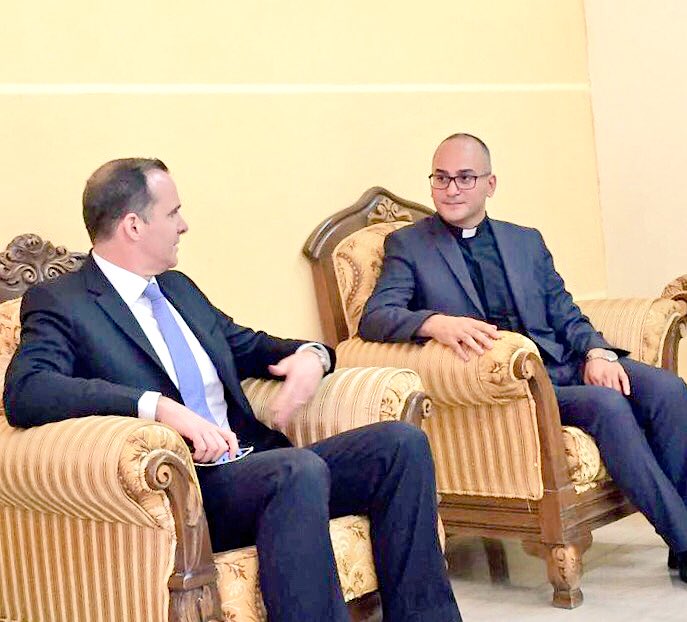
We'll note these Tweets from US Special Envoy Brett McGurk that pertain to one group of Iraqi Christians.


Grateful for Father Salar & people of Telskuf for your warm welcome. Restoring life to your town defies and honors our fallen. 5/5


Our supports Telskuf & towns around Mosul w/stabilization projects. This substation will soon return power to plain. 4/5


lost. Churches are still standing, now being restored, & 4,000 people have returned to their homes in over last 6 months. 3/5


is a mostly Christian town de-populated by in 2014. terrorists tried to destroy churches that stood since 258 AD. 2/5


Visited today just north of . U.S. Navy SEAL Charles Keating IV sacrificed his life here fighting on May 3, 2016. 1/5


The following community sites -- plus GORILLA RADIO -- updated:


  • iraq iraq iraq iraq iraq Iraq


    Wednesday, August 23, 2017

    Best living rock band

    Forget the Rolling Stones.  They're still good but their day has passed.

    U2?

    Unlike the Stones, they aren't still good.  They're irritating and boring.

    And I do blame Bono but there's only so much blame you can heap on one person of a four person band.

    For me, it's got to be the Afghan Whigs.


    Closing with C.I.'s "Iraq snapshot:"


    Wednesday, August 23, 2017.  Chaos and violence continue, a reporter visits 'liberated' Mosul, the US government works overtime to prevent Kurdish independence, and much more.


    From video report below: "The Baghdad government has declared victory.  But the threat still lingers.  There are still pockets of ISIS fighters  in the old city.  And this is what liberation looks like.  Iraq's second largest city, just ruins."


    Yalda Hakim reporting from Mosul for the BBC.


    At THE DAILY MIRROR, they have a photo essay featuring Carol Guzy's photographs of some of the Mosul survivors.


    Meanwhile, it's apparently victory lap time for others.


    Proud to serve with LTG Townsend, a nightmare for as he led our campaign in and over the past 12 months.


    Hmm.

    I wonder.

    Mad Maddie Albright infamously declared on TV, in the 90s, that the death of 1/2 million Iraqi children was worth it.  She was still aglow, feeding on the blood of the dead.

    Ten years later, she realized that gloating would follow her forever.

    Will Brett be so proud in 2040?  When we have a strong estimate on exactly how many civilians were killed?


    And the war drags on.


    Iraqi forces enter 1st neighborhood in Tal Afar, last major redoubt in Iraq


    When Tal Afar falls, I guess they'll move on to the next "last #IS major redoubt in Iraq" -- the way that was once how they described Mosul.  Will that be Hawija?


    US Special Envoy Brett McGurk called Tal Afar "the last major city they [ISIS]'re holding in northern Iraq."


    W.J. Hennigan (LOS ANGELES TIMES)  passes on, "U.S. commanders say the offensive against the estimated 2,500 militants in and around Tall Afar will be grinding because Islamic State fighters built extensive defenses. Among them: They lined up derelict vehicles to push invading forces into a kill zone strewn with booby traps."  Really?

    Grinding?


    Because abandoned cars and trucks are directing the foot flow?

    How many tons of bombs is the US coalition planning to drop on Tal Afar?

    2,500 militants?

    You'd think the Iraqi forces -- even the Iraqi forces? -- could handle 2500 fighters by themselves.

    You'd think.


    In other news, the US government again meddles in foreign elections.


    Yesterday, Brett McGurk declared, "We believe these issues should be resolved through dialogue under the constitutional framework and that a referendum, at this time, would be really potentially catastrophic to the counter-ISIS campaign. We've mentioned that before. And so we've made that position very clear, but we are hopeful that this dialogue that's going on now can deliver some results."


    But, Brett, the KRG is following the Constitution of Iraq, as you well know.

    As for timing?

    Isn't it funny how the oppressors will always insist to the oppressed that they're not against freeing the oppressed but just not right now?

    There's never a 'good time' for certain types to give up the reigns (and whip?) but there is a "right time" for it and I'd argue a referendum on Kurdish independence is long overdue.


    Australia's ABC notes:

    And one of them [working for the referendum] is Zirian Fatah, from Kurdish Lobby Australia.
    "Both my parents were freedom fighters, fighting on the front line against Saddam Hussein's dictatorship," he said. "As a child my bassinet was a suitcase."
    Now, with dialogue rather than bullets, he's working to win support in Australia for the independence referendum.
    "The reality of Iraq is it was always fictional. It was always a state that was sticky-taped together," he said.
    "During the 1920s, the Kurds were promised their own state. Unfortunately, due to the superpowers — the British and the French — Kurdistan was divided and carved up amongst four host nations. We're hoping to see that undone now.
    "The Kurdish people aspire to achieve their independence. It has been a long time coming, and it is an historic moment in time."


    But the US government is attempting to stop the vote from taking place.


    It's interesting, isn't it, how this happens in the open with no outrage in the US?


    Contrast that with the still unproven charge that Russia 'hacked/interfered/mind controlled' the 2016 US presidential election.  Contrast it with the outrage and hysteria from Hillary Clinton's Temple Prostitutes.  Or crazed Hillary herself, right?


    In the United States, IAVA issued the following:


    PRESS CONTACT
    Tel: 212-982-9699

    NEW YORK, NY (August 19, 2017) – Today, Iraq and Afghanistan Veterans of America, the leading voice of the Post-9/11 generation of veterans, applauded the President’s signing of H.R. 873, establishing a memorial in Washington for our generation of warriors. This is the third IAVA legislative priority to become law in the last month, with another expected this week on VA appeals.

    “We are proud to support a memorial for the Global War on Terror in the nation’s capital. We thank Andrew Brennan and the GWOT Memorial Foundation for their steadfast leadership, and members of Congress and the President for listening to veterans and acting quickly to sign this bill into law,” said Paul Rieckhoff, Founder and CEO of IAVA. “Eighty-two percent of IAVA members said that they support the creation of a memorial for veterans and their families of this era. Having a place for our generation to gather and mourn is vital to honoring all those who have served since 9/11. We’re proud to stand shoulder to shoulder with our VSO partners to ensure that veterans and their families have somewhere to reflect and remember the sacrifice of those in our community.”

    IAVA has advocated for a Post-9/11 National Monument in its Policy Agenda for years. For the full IAVA recommendations on a national memorial, please see the 2017 IAVA Policy Agenda.
    Note to media: Email press@iava.org or call 212-982-9699 to speak with IAVA CEO and Founder Paul Rieckhoff or IAVA leadership.

    Iraq and Afghanistan Veterans of America (www.IAVA.org) is the leading post-9/11 veteran empowerment organization (VEO) with the most diverse and rapidly growing membership in America. As a non-profit founded in 2004, IAVA’s mission is to connect, unite and empower post-9/11 veterans. Celebrating its 12th year anniversary, IAVA has connected more than 1.2 million veterans with resources and community, and provided more than 7,300 veterans with personalized support from IAVA’s Master’s level social workers.


    The following community sites -- plus Jody Watley, BLACK AGENDA REPORT, LATINO USA and CHOCOLATE CITY -- updated:


  • iraq iraq iraq iraq iraq Iraq


    Monday, August 21, 2017

    Tori Tori Tori


    That's Tori Amos in the studio for NPR.

    Her album, her latest album is due out next month.

    This is from Tori's website:

    NATIVE INVADER IS NOW AVAILABLE FOR PRE-ORDER!

    Get the Standard or Deluxe version which includes two bonus tracks: "Upside Down 2" and "Russia"


    Pre-Order Now


    Native Invader is an intense feast of melody, protest, tenderness and pain. In the summer of 2016, Tori took a road trip through North Carolina's Smoky Mountains. The intention was to reconnect with the stories and songlines of her mother's family, who were from the North Carolina and Tennessee Smoky Mountain area. That winter, two seismic events knocked the plan off its axis. The fall out from the US Election. And in January her mother, Maryellen Amos, suffered a severe stroke leaving her unable to speak.

    The complex influence of America's alt-right Super PACs, lobbyists and think tanks informs much of the tension in Native Invader. "It wasn't going to be a record of pain, blood and bone when I began," Tori says. "It wasn't going to be a record of division. But the Muses 9 insisted that I listened and watched the conflicts that were traumatizing the nation and write about those raw emotions. Hopefully people will find strength and resilience within the songs to give them the energy to survive the storms that we are currently in". The sense of semantic distortion permeates Native Invader. Tori talks of the need to form a "militia of the mind" in the face of national lies. 


    Closing with C.I.'s "Iraq snapshot:"


    Monday, August 21, 2017.  Yet another operation to 'liberate' Iraq.


    Saturday (in the US, it was already Sunday in Iraq), Prime Minister Hayder al-Abadi announced the start of operations against Tal Afar.

    Tal Afar?

    Yet another city controlled by the Islamic State.

    Like Mosul, it's in Nineveh Province.  Unlike Mosul, it's population isn't in the millions.  The city is estimated to have less than 100,000 or a little over 200,000 depending on the source.  The bulk of the population is said to be Turkmen.


    ISIS fired Guided Missile caused considerable damage to Iraqi Forces Abram Tank in outskirts of TalAfar City yesterday, West of Mosul.


    TULSA WORLD explains "surrender or die" is the choice Hayder has presented the Islamic State with.  He did so in televised address where he played dress up.

    ALJAZEERA notes, "Thousands of civilians are leaving the Iraqi city of Tal Afar as the army tries to retake it from ISIL."  BBC NEWS also points out that "the UN has warned that thousands fleeing the area are at risk, trekking for hours in extreme heat."

    As yet another operation begins in Iraq, this observation is offered.

    It's noteworthy that the most effective forces against ISIS have been America's adversaries: Hezbollah, Syrian army, Russia & Iraq PMUs.


    The US Defense Dept announced this morning:

    In Iraq, coalition military forces conducted nine strikes consisting of 84 engagements against ISIS targets:
    -- Near Asad, a strike suppressed an ISIS tactical unit.
    -- Near Qaim, a strike destroyed an ISIS supply cache.
    -- Near Qayyarah, a strike engaged an ISIS tactical unit and destroyed an ISIS headquarters.
    -- Near Rawah, two strikes engaged an ISIS tactical unit and destroyed a staging area and an ISIS barge.

    -- Near Tal Afar, four strikes engaged four ISIS tactical units; destroyed five rocket-propelled-grenade systems, four tunnel entrances, four fighting positions, four vehicle-borne bombs, two tactical vehicles, two weapons caches, two supply caches, a command-and-control node, a medium machine gun and an anti-tank weapon; damaged five supply routes; and suppressed 32 mortar systems.


    Ahmed Sami (THE SCOTSMAN) reminds, "Along with Tal Afar, IS militants are still fully in control of the town of Hawija west of Kirkuk, as well as the towns of Qaim, Rawa and Ana in western Iraq near the Syrian border."


    In other news, religious issues continue.

    Iraqi Christian leader fears rise of ‘new Islamic State’


    Paul Singer (USA TODAY) reports:

    Stephen Rasche says the next six weeks will be critical for saving some of the world’s oldest Christian communities from extinction.
    Rasche is coordinating a task force trying to return tens of thousands of Christian families to the ancient Iraqi towns from which they were driven by ISIS three years ago.


    Last week, the US State Dept issued the 2016 International Religious Freedom Annual Report.  From the report:

    The U.S. government estimates the population of Iraq to be 38 million (July 2016 estimate). According to 2010 government statistics, the most recent available, 97 percent of the population is Muslim. Shia Muslims, predominantly Arabs but including Turkmen, Faili (Shia) Kurds, and others, constitute 55 to 60 percent of the population. Sunni Muslims make up approximately 40 percent of the population: approximately 15 percent of the total population are Sunni Kurds, while approximately 24 percent are Sunni Arabs, and the remaining 1 percent are Sunni Turkmen. Shia, although predominantly located in the south and east, comprise the majority in Baghdad and have communities in most parts of the country. Sunnis form the majority in the west, center, and the north of the country.
    Christian leaders estimate there are fewer than 250,000 Christians remaining in the country. The Christian population has declined over the past 15 years from a pre-2002 population estimate of between 800,000 and 1.4 million persons. Approximately 67 percent of Christians are Chaldean Catholics (an eastern rite of the Roman Catholic Church); nearly 20 percent are members of the Assyrian Church of the East. The remainder are Syriac Orthodox, Syriac Catholic, Armenian Catholic, Armenian Apostolic, Anglican, and other Protestant. Only 50 evangelical Christian families reportedly remain in the IKR, down from approximately 5,000 in 2013.
    Yezidi leaders report most of the approximately 350,000 to 400,000 Yezidis reside in the north. Estimates of the size of the Sabaean-Mandaean community vary. According to Sabaean-Mandaean leaders, 10,000 remain in the country, mainly in the south with small pockets in the IKR and Baghdad. Bahai leaders report fewer than 2,000 members, spread throughout the country in small groups. The Shabaks constitute about 350,000-400,000 people, two-thirds to three-fourths of whom are Shia and the rest Sunni, and are mostly located in Ninewa. According to Kaka’i (also known as Yarsani) activists, their community has approximately 300,000 members, traditionally located in the Ninewa Plains, but also in villages southeast of Kirkuk, as well as in Diyala, Erbil, and Karbala. The Jewish representative in the KRG Ministry of Endowment and Religious Affairs (MERA) reports 430 Jewish families reside in the IKR. Fewer than 10 Jewish families are known to reside in Baghdad.
    According to the International Organization for Migration (IOM), the number of internally displaced persons (IDPs) in Iraq was 3.06 million at year’s end. The United Nations High Commissioner for Refugees and the IOM estimate one million citizens remain internally displaced as a result of sectarian violence dating from 2006 and 2008 before ISIS became active. During the conflict with ISIS beginning in 2014, up to 3.5 million persons were internally displaced. Difficulties in gaining access to IDPs in areas of conflict, as well as the government’s limited capacity to register IDPs, means estimates of religious minorities among the IDPs are imprecise. According to international sources, more than 60 percent of Iraqi IDPs are Arab Sunni, approximately 17 percent are Yezidi, approximately 8 percent are Turkmen Shia, approximately 3 percent are Arab Shia and 3 percent are Kurdish Sunni. Shabak, Chaldean, and Assyrian Christians, Turkmen Sunni, and Kurdish Shia account for approximately 6 percent of the IDP population.

    [. . .]

    National identity cards denote the holder’s religion. The only religions which may be listed on the national identity card are Christian, Sabaean-Mandean, Yezidi, and Muslim, and there is no distinction between Shia and Sunni Muslim affiliation nor designation of Christian denominations. Individuals practicing other faiths may only receive identity cards if they self-identify as Muslim, Yezidi, Sabaean-Mandean, or Christian. Without an official identity card, non-Muslims and those who convert to faiths other than Islam may not register their marriages, enroll their children in public school, acquire passports, or obtain some government services. Passports do not specify religion.

    [. . .]

    There continued to be reports that local police and Shia militia killed Sunni detainees. International and local NGOs reported the government continued to use the antiterrorism law as a pretext for detaining Sunnis without timely access to due process. Community leaders said forced conversion was the de facto result of the national identity card law. Some Yezidi and Christian leaders continued to report harassment and abuses by KRG Peshmerga and Asayish forces in the portion of Ninewa Province controlled by the KRG or contested between the central government and the KRG. Displaced members of certain religious groups report they were prevented from returning to their homes after their cities were liberated from ISIS. Yezidi groups said the presence of armed affiliates of the Kurdistan Workers Party (PKK) in Sinjar and the imposition of security restrictions on the district by the KRG hindered the return of IDPs. In May KRG representatives revoked permission for Yazda, the largest Yezidi-run humanitarian and political advocacy organization, to operate in IDP camps. Officials restored access in October. In some parts of the country, non-Muslim religious minorities, as well as Sunni and Shia in areas where they formed the minority, faced harassment and restrictions from the authorities. The Iraqi Security Forces (ISF) continued to deploy police and army personnel to protect religious pilgrimage routes and sites, as well as places of worship, during Islamic and non-Islamic religious holidays. The KRG also offered support and funding to some non-Muslim minorities, but other minorities in the IKR, such as evangelical Christians, faced difficulties registering and proselytizing. Because religion, politics, and ethnicity were often closely linked, it was difficult to categorize many incidents as being solely based on religious identity.
    Human Rights Watch (HRW) and Amnesty International (AI) reported evidence of torture and ill-treatment of Sunni detainees by Iraqi Security Forces (including PMF fighters), as well as the deaths of Sunni men who were in custody, detained under the antiterrorism law.
    In October, AI reported that men in Federal Police (a Shia-dominated organization) uniforms carried out multiple unlawful killings of Sunnis suspected of being ISIS militants or sympathizers in and around Mosul. In some cases, AI stated individuals were tortured before they were shot and killed execution style or run over with armored vehicles. In October in the Al-Shora subdistrict, men in Federal Police uniforms reportedly brutally beat and killed Ahmed Mahmoud Dakhil and Rashid Ali Khalaf, villagers from Na’na’a, as well as a third man from the village of Tulul Nasser.
    In an October report, AI reported Sunni Arab IDPs from parts of Salah al-Din and Diyala Provinces feared attacks by Shia militias in control of those towns, and said the militias had committed gross human rights abuses against residents. AI documented what it referred to as “war crimes and gross human rights violations,” including extrajudicial executions and other unlawful killings, torture, and enforced disappearances, committed against Sunnis fleeing Saqlawiya and al-Sijir and accused of being complicit in ISIS crimes or having supported the group. AI stated the violations were committed by Shia PMF militias and fighters wearing military or Federal Police uniforms. For example, AI reported the extrajudicial execution of at least 12 men and four boys from the Sunni Jumaila tribe in al-Sijir by armed men in various security force uniforms. The Iraqi Federal Police denied any involvement in the abuses.
    Hundreds of men seized by the PMF on May 27 and June 3 remained unaccounted for at year’s end. According to the testimonies of some survivors, ISF and the Shia militia group Kata’ib Hizballah had been close by when these individuals were captured. Iraqi forces had been stationed near the sites of crimes in Tarek’s Military Camp (Mu’askar Tarek), located along the old Baghdad-Falluja road. On June 5, Prime Minister Haider al-Abadi established a committee to investigate the May and June disappearances, vowing to punish those responsible, and announced the arrest of an unspecified number of individuals who had committed the crimes. The prime minister, however, said the abuses were not part of a systematic pattern, and should not overshadow the battlefield successes and the assistance provided by Iraqi forces to Sunni Arab IDPs. In many cases, Shia PMF units reportedly operated independently and without oversight or direction from the government.
    International and local NGOs stated the government continued to use the antiterrorism law as a pretext for detaining Sunni men – and their female relatives – for extended periods of time without access to a lawyer or due process. In October courts in Basrah announced 1,251 Sunni detainees had been affected by the new Amnesty Law, which allowed some individuals convicted under the antiterrorism law to apply for judicial review, and 538 had already been retried. The Ministry of Interior’s spokesperson reported that in June, 700 Sunni men were detained following the battle of Falluja based on their confessions of being ISIS supporters. According to the Anbar Police Command, out of 19,400 Sunni men initially arrested under the antiterrorism law for suspected connections to ISIS, 2,046 men were detained, while the remaining individuals were released. AI reported evidence of torture and ill-treatment of Sunni detainees, as well as deaths of Sunni men who were in custody, detained under the antiterrorism law. Religious organizations such as the Association of Muslim Scholars spoke publicly about human rights abuses in prisons in their annual report.

    Official investigations of abuses by government forces, armed groups, and terrorist organizations continued to be infrequent, and the outcomes of investigations which did occur continued to be unpublished, unknown, or incomplete, according to NGOs.


    There's a lot to discuss and debate in the report.

    Sadly few in the press are informed enough to do so as was demonstrated last week (August 15th) when the US Bureau of Democracy, Human Rights and Labor's Ambassador Michael Kozak held a briefing.

    Who was the most uninformed?

    A difficult question but I'd go with THE NEW YORK TIMES' Gardiner Harris who appeared to have never read the annual report and seemingly was unembarrassed to be so uninformed.

    He asked, "Hi. I noticed that – do you not track religious freedom in the United States? And if so, --"

    Wait, you noticed it Gardiner?

    Did you, because you then asked "do you not" and qualified "And if so . . ."

    No, the US doesn't track itself and hasn't for decades.


    AMBASSADOR KOZAK: Yes, thank you. As is the case with the Human Rights Report, we do not rate ourselves. I – there was an effort to do so – I’m old enough to remember; it was 30-some years ago. And when we all looked at it, people started laughing. It was like writing your own performance evaluation or something. You either were way too modest or you looked like you were bragging on yourself. So that – but that does not mean that the U.S. thinks itself exempt from this kind of rating. There are mechanisms in the United Nations, in the Organization of Security and Cooperation in Europe and so on that do publish this kind of data. There’s an excellent, for example, in the OSCE, a tolerance unit. We – the U.S. is actually a pretty good model in that the data that you’re citing there comes from FBI reports, and those are all cranked into the OSCE reports at the end of the year. So we actually have, I think, a better record than many of the other member-states in terms of reporting details about performance in our own country. 


    Oh, well, Gardiner was probably too busy obsessing over HAIM.


    New content at THIRD:


    Also check out Jody Watley:


  • iraq iraq iraq iraq iraq Iraq