But I'm damned if I can pick the number one.
I keep listening to five over and over trying to determine which is the number one album of the year.
On the plus side, 2014 has been the best year for music so far this decade.
So I'm not accused of being a tease, I'll tell you who won't be number one.
Tori Amos.
I love the album but it just not screaming for the top spot the way others are.
In fairness to Tori, she's had nothing but strong and excellent output since Scarlet's Walk so I may be accustomed to her greatness.
I love Tori and I love the album.
But she's not among the five fighting it out for my number one spot.
Going out with C.I.'s "Iraq snapshot:"
Tuesday, December 16, 2014. Chaos and violence continue, the US
government remains in no rush on assisting Iraq, the Sunnis don't have
to choose between an Iraqi government that targets them and the Islamic
State, the so-called Human Rights Ministry of the Iraq government spins a
fantastic tale they can't back up (watch to see who runs with it as
fact), US Senator Tom Coburn is called out by veterans, and much more.
The White House pretends they're doing something -- anything -- in Iraq.
Not only is their no plan, there's no sense of urgency.
From today's Pentagon press briefing by spokesperson John Kirby.
Q: John, thanks.
Could you bring us up to date on Iraq? The flow of troops that are going to be going in now that the funding has been approved? Can you give us an idea of sort of the pace and over what time period can we expect to see those -- that additional -- those 1,400?
REAR ADM. KIRBY: The Iraqi train and equip fund, as you know, is part of the NDAA. It has not been signed yet into law. That said, we do know it's -- we're grateful for the support that we got from Congress, and we know it's coming.
There have been no -- they are -- we are still working through sourcing solutions on all of or as many of those troops as possible. So, no troops have been given orders to go yet, nor have any actually started the process of deploying. But the sourcing solutions are being worked out.
And as I said last time, General Austin has taken advantage of resources that he has in the region already to begin to set the stage for that. So, he's done a couple of things. He's got a small number that are already doing some advise and assist operations and missions. They're in Anbar, a small number, 50, 60, something like that.
And then he has another nearly 200 or so that are beginning to -- to build out the infrastructure and set the conditions so that when we fall into those four other locations to do more hands on training with Iraqi brigades, they'll -- they'll be ready.
So, while no training has started yet, no formal training, we are doing advise and assist in keeping with that program, and are getting ready and setting the stage for the trainers that will follow. And I would like to add, you know, as I said before, that many other nations are -- are planning to contribute trainers as well. This won't be a U.S. mission.
Q: But what's the target? I guess at least, you know, general target date for when that training -- the troops might be in and the training might start?
REAR ADM. KIRBY: I'm not aware of a specific date on the calendar, that it will be ready to start, and I -- my guess is it won't be a shotgun start, Lita. We'll -- we'll start it when and where we're able to over the next few months.
But I think it's going to be a period of several months before we're actually ready to, you know, to get it launched and get it going.
Q: Several months for the first -- for the beginning of it?
REAR ADM. KIRBY: I think so. I think so. But again, we'll -- we'll keep you updated. As I said I would last week, we'll keep you updated as -- as we know. And certainly when units are deployed, you'll know because we always inform you and the public about that. So once we're in that -- at that position, we'll -- we'll be able to talk to it.
Do that, keep us updated. On how, some day real soon, the administration's start date will arrive.
Boot licker Roger Shanahan (Interprter) thinks time is a luxury the US government has:
In Iraq, the US finds itself in the rather unusual situation where ISIS has all the watches but the Coalition has all the time. While ISIS consists mostly of Iraqis, it also has a growing number of foreign fighters in its ranks. If the Shi'a-dominated Iraqi forces who were in charge before ISIS swept in were seen as occupiers in the Sunni heartlands, the rule of ISIS is now starting to be viewed as something similar, and perhaps worse.
The Coalition does not have all the time -- no one does.
The reality is, as DoD has admitted, the Islamic State has now adapted to the bombings. That's the whole 'plan' so to pretend the US is in the lead with 'all the time,' is just ridiculous.
It's also ridiculous to assume that the Islamic State is going to send Sunnis into the arms of the Shi'ites.
Nothing the Islamic State is doing is that shocking to the Sunnis.
It's frightening to the rest of the world but, for example, raping and torturing women?
Real sorry you just woke the f**k up today but the Sunnis have been dealing with that for years. It was one of the main things fueling the protests that kicked off in December 2012.
But Barack Obama was still playing footsie with thug Nouri al-Maliki so the world looked the other way.
But Sunni women and girls were being tortured and raped in Iraqi prisons and jails.
And when it did become a big issue in Iraq -- and only in Iraq because US Senator Barbara Boxer and all the other fake asses suddenly worried about Iraqi women -- Nouri's response was a for show release or 'release' of a few women.
And the western press that did cover the for show incident were far too squeamish and delicate when it came to rape to even properly cover that.
We can go down the list piece by piece, the offenses of the Islamic State currently (in a few isolated areas they control) and the widespread offenses by the government of Nouri al-Maliki for eight long years.
The alleged difference between the two -- the Islamic State and the government of Iraq -- that boot lickers like Rodger see aren't necessarily seen by the Sunnis.
Barack kept chirping "political solution" which didn't mean what so many fools seem to think it did.
It meant a Sunni buy-in of the government.
That required massive changes. Rodger thinks a new prime minister was the trick.
No.
Rodger's a stupid idiot.
We said, before Nouri was forced out, that a new prime minister would not be the answer but would provide Iraq with some time to rebuild, a restart.
And we didn't just say that when Barack stopped backing Nouri.
We said it before the April parliamentary elections.
A new prime minister provided a brief chance to restart, to show a new Iraq.
Haider al-Abadi has been prime minister since August and he's done damn little.
Don't throw out the Kurd and Baghdad oil deal. Not only is it a victory for the Kurds but that wasn't really the issue.
So when Brett McGurk stroking himself before the House Foreign Affairs Committee about the oil deal, he's not just lying about the 'victory,' he's lying about what it means.
Because of Massoud Barzani, KRG president, the Kurds are getting much of what they want.
But they weren't going to split off anyway, not this year or next.
The clear priority was the Sunnis.
But there's been nothing -- oh, wow, a minister post -- tossed to them.
They've been lied to.
Haider insisted, September 13th, that the bombing of Sunni homes in Falluja by the Iraqi military was over.
Nouri started those bombings in January of this year.
Daily, these bombings have resulted in Sunni civilians being wounded and killed -- and their homes turned into rubble.
Haider said September 13 that the bombings were over.
And September 14th, they continued.
And they continue to this day.
The only promise he made to the Sunnis and he failed to keep it.
Asharq Al-Awsat reports today:
Reconstruction in Iraq’s western province of Anbar, large parts of which remain under the control of Islamic State of Iraq and Syria (ISIS) fighters, will cost more than 18 billion dollars, a local official said on Tuesday.
Arkan Khalaf Al-Tarmouz, head of the Anbar Reconstruction Committee, informed Asharq Al-Awsat that ISIS remains in control of more than 85 percent of territory in Anbar, adding that there has been large-scale destruction across Iraq’s largest province in the fighting between ISIS and government forces.
“Initial estimates indicate that 40 percent of Anbar’s cities have been destroyed, including major infrastructure and residential areas,” Tarmouz said.
The bulk of the destruction is coming from the the militaries (Iraq, US, etc) and not the Islamic State. The Islamic State flies no planes over Iraq, drops no bombs from the air.
But idiots like Rodger don't just miss that point, they miss the reality that it's not an either/or world. Sunnis can continue to reject that Iraqi government that attacks them and they can also reject the Islamic State.
People can, and sometimes do, have two enemies.
While dumb asses like Rodger ignore reality, others don't. Noting the efforts to build a Sunni military component, Susannah George (Global Post) also notes the reality of Sunni and Baghad-based government relations:
When the US announced its intention to support Iraq in its fight against the Islamic State (IS), it did so on the condition that the government undergo serious reforms to reach out to the country’s Sunni population, who were severely marginalized under the sectarian rule of former Prime Minister Nouri al-Maliki.
US-backed legislation to create an Iraqi “national guard” — first proposed in September — was aimed at diluting Sunni support for IS by promising Sunni fighters, including tribal forces, weapons and supplies from Iraq’s central government. A former Iraqi National Guard force was absorbed into the army a decade ago.
It was hoped that these groups would recapture the Sunni areas held by IS, also known as ISIS or ISIL, in western Iraq.
But with the Iraqi government failing to make headway in the fight, and the national guard legislation languishing in parliament, the US has begun to work behind the scenes to train and prepare to arm Iraq’s Sunnis on its own.
There isn't all the time in the world.
Well there is all the time in the world for Rodger to make an ass of himself.
But in terms of Iraq, time is limited. The window for Hadier to show change is closing quickly.
On the issue of the US training forces, let's go back to today's DoD briefing:
Q: Back on Iraq, could you give us more details about the train -- training program of the Iraqi forces? How many U.S. members will be involved in that program? And also, if you -- if you -- if you are aware of any contacts between this building, the U.S. military, and the Sunni tribal leaders in Iraq.
REAR ADM. KIRBY: Okay, Joe, hold on a second. So we talked about the fact that we don't have a -- you know, we don't have the -- to Lita's question, we don't have sourcing solutions on the -- the 1,500 additional. And remember, it could be up to 1,500. It may not be 1,500.
But the way it'll break down -- and I think I actually put this out when we initially announced this. So you'll have roughly, for the advise and assist mission, about 630 roughly. Again, it may not go that high. Some of those will be enablers. They'll be people that do logistics command and control, intelligence support.
And then you'll have in the building partner capacity mission, the training mission, about 870 of those. Again, those numbers are flexible because we may not go up to that 1,500. The training hasn't begun yet. Again, my -- I think -- I think I dealt with the status when I answered Lita's question.
On your other -- on your other question, there's been no direct -- from the few advisers that we have out in Anbar, there's been no direct involvement with Sunni tribal leaders from them. Now, they are advising Iraqi leaders. And one of the things that we're working with Iraqi leaders on is to encourage their outreach to Sunni tribal leaders. But there's been no direct contact out there between the very small number of advanced advisers we have there and Sunni tribal leaders. I -- that said, now, in the Office of Security Cooperation in Iraq out of Baghdad, which is -- has had a footprint there since 2011 when -- when we ended our combat operations there in Iraq, they have had some contact with -- as -- as the due course of their duties, they have had some contact with tribal -- Sunni tribal leaders in that part of -- of Iraq. But there's been no direct advising, assisting, training of Sunni tribal leaders.
Q: But that -- excuse me. Just to follow up, there is a plan to arm the -- the -- the tribal -- the Sunni tribes...
REAR ADM. KIRBY: It is something -- it is something that we've been in discussion with Iraqi leaders about, and we've stressed the importance of inclusiveness here with Sunni tribal leaders.
Q: But I mean, there is a U.S. plan to equip and arm the tribes in Iraq.
REAR ADM. KIRBY: No, as we said before, that that could be one iteration of the plan further down the road. But it wasn't going to be the out -- at the outset. The outset is to train Iraqi brigades, nine, and then three Pesh brigades. That's the focus at the outset.
We have opened the door. We've said it could be possible that later on down the road, there may be an equipping program or a part of it that would include some equipping of -- of Sunni tribes. But that was something that hadn't been decided yet. It was something under discussion, and we just aren't at that point right now.
Q: (inaudible) in a briefing at CENTCOM for several reporters here from the Pentagon, the CENTCOM leadership there told us that it was up to the Iraqi government to reach out to the Sunni leaders and not the U.S.
Is -- is the U.S. going to be involved in -- in trying to revive a Sunni awakening? Or is this going to be up to the Iraqis to do?
REAR ADM. KIRBY: No, Jim, it's, as I said to Joe, this is something we want the Iraqis to do. And we're not in direct communication and coordination with Sunni tribal leaders right now. We want the Iraqis to do that. And frankly, that's part and parcel of the whole advise- assist mission itself is to help them be more inclusive, to be more comprehensive, and to be better at -- at what they're doing in terms of defending their own people out there in Anbar.
So, there's no plans right now for a -- a new awakening, as you saw during the -- during Operation Iraqi Freedom. We want the Iraqis to do this. But we are encouraging that. We have been encouraging that. We were encouraging Prime Minister Maliki to do that before he left office.
Q: Since -- since the Sunni -- since some of these Sunni leaders have already made it clear that they still don't trust the Iraqi leadership in Baghdad, do you see a role for the U.S. to serve as some kind of middle man, a mediator?
REAR ADM. KIRBY: Well, you know, now you're asking a question that may be better put to my colleagues at the State Department. I don't see a U.S. military role in that regard. Again, we want to advise and assist them to be more inclusive and for them to be better at what they're doing. And that's where the focus is on, is helping them get to that point where they're more inclusive of Sunni tribal leaders.
Q: Following up on that, what was Secretary Hagel's assessment of the Iraqi progress on the front that Mick has been asking about, about how well the new government is doing reaching out to the Sunnis?
REAR ADM. KIRBY: Sure. I think the secretary, as he said to you guys when we left Baghdad, he came away from those meetings encouraged that Iraqi leaders understand the importance of doing exactly that, Julian, of being more inclusive and reaching out to the Sunni tribes.
But the secretary also understands that that requires some energy and some -- and some leadership out there in Baghdad. And again, he's encouraged that they -- that they understand the need for it and that they will exert that leadership. But he knows that this is -- you know, some -- for -- this is a new government, so this is new ground that they have to -- that they have to tread.
MEE carries a write up which opens, "At least 150 women who refused to marry fighters belonging to the Islamic State (IS) group have been executed in the western Iraqi province of Anbar, the country's Ministry of Human Rights reported."
Do you believe it?
Anyone who presents it as fact should be a question mark in your judgment.
The so-called Human Rights Ministry in Iraq is a propaganda front. That was true under Nouri, it's been true since Nouri.
They make statements rejecting claims of abuse by the government that news outlets uncover, that Human Rights Watch uncovers, that Amnesty International uncovers.
They've yet to expose any crimes committed by the government.
These days they concern themselves with what they say are the actions of the Islamic State.
The story may very well be true.
But it's coming from a propaganda outlet.
When did these events happen?
There it gets sketchy.
Okay, where did they happen?
Supposedly in Falluja.
Where the Iraq government is not in control.
So where did the details come from?
And the numbers?
At best, the ministry got some gossip they couldn't confirm.
But would the Islamic State, if they wanted 'jihad' brides, really target visibly pregnant women?
They're fundamentalists.
And yet we're supposed to believe, from the Ministry, that the Islamic State didn't just go after women to force into marriage, they went after pregnant women.
Extreme fundamentalism sees women as property to be taken by men. Women have little standing in that view. In one of the few times, with those types of people, when women do have stature? When they're pregnant.
The story doesn't ring true.
The story was clearly not verified by the Ministry or the Iraqi government -- nor could it be.
But it is part of an ongoing effort to create alarm by the Iraqi government.
If the Iraqi government's looking for false tales maybe they could revisit the 90s lie about babies being tossed out of incubators?
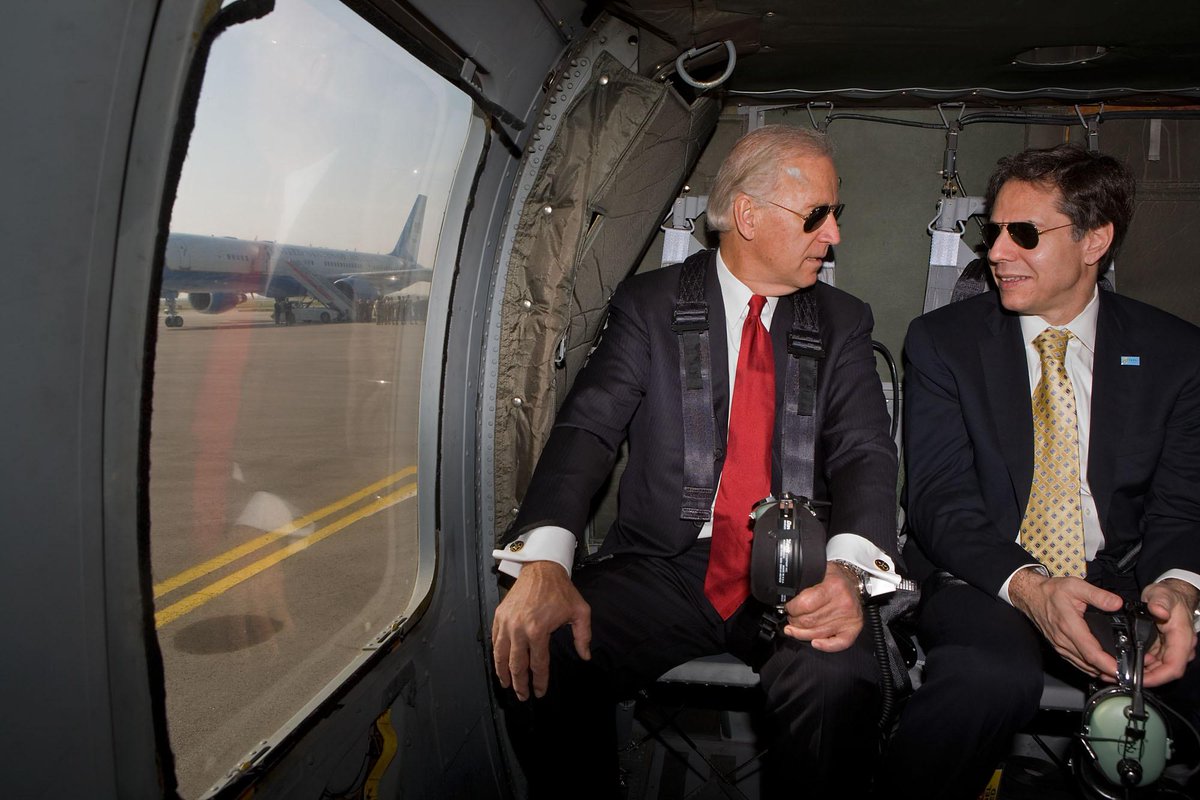
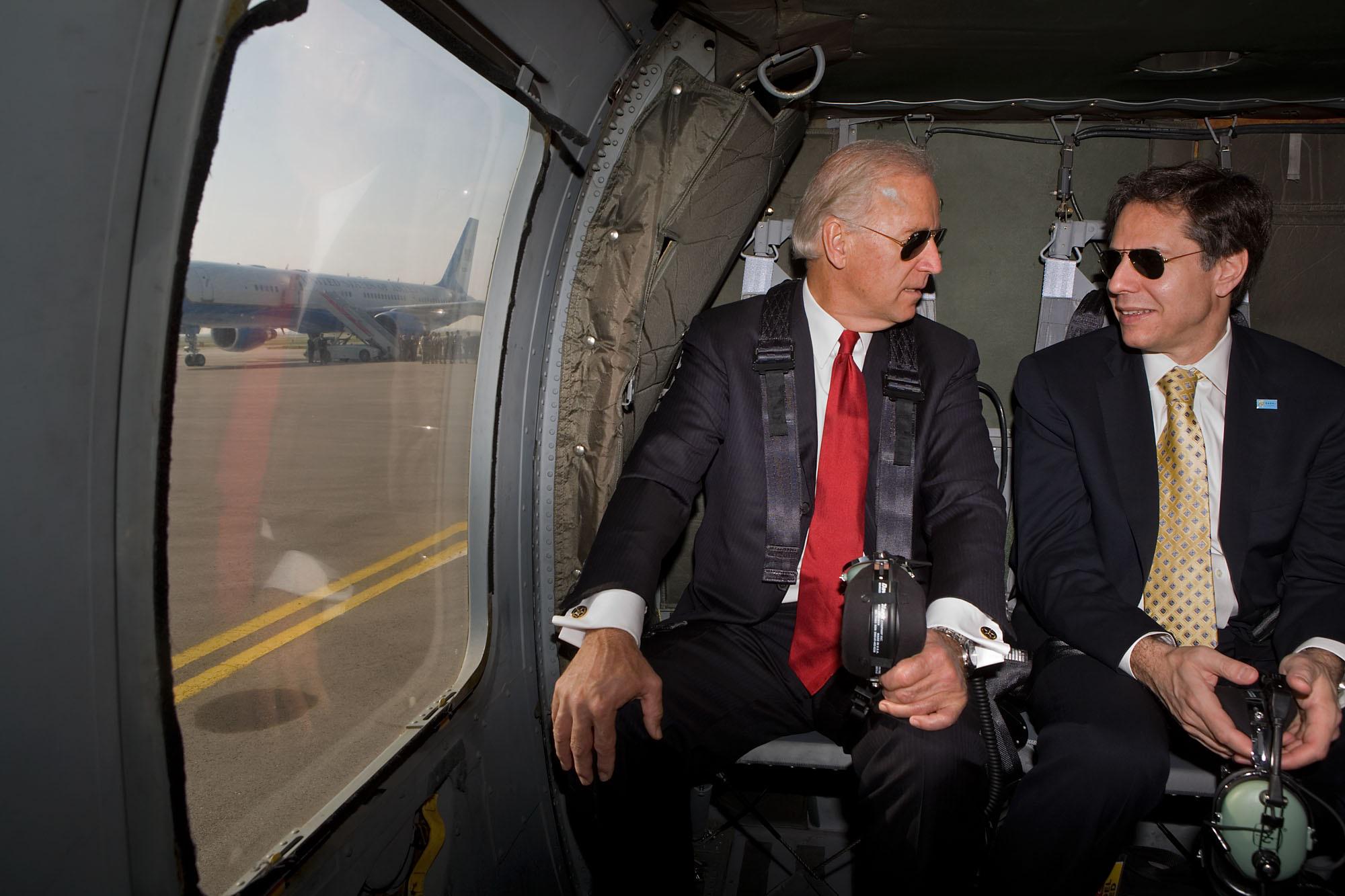
From Iraqi government tales to US government Tweets, US Vice President Joe Biden issued the following today:
 98 retweets
123 favorites
98 retweets
123 favorites
We'll close with this from Iraq and Afghanistan Veterans of America:
Washington, D.C. (December 15, 2014) – Due to the action of one U.S. Senator, critical legislation that would address the epidemic of veteran suicide was today blocked in the Senate. Iraq and Afghanistan Veterans of America (IAVA), which spearheaded the Clay Hunt Suicide Prevention for American Veterans (SAV) Act, blasted Senator Tom Coburn (R-Okla.) for objecting to passage of this vital legislation that would support the veterans community. The legislation, unanimously passed last Tuesday by the House, is named after Iraq and Afghanistan war veteran Clay Hunt, a Marine who died by suicide in 2011.
“As parents who experienced the pain of losing a veteran to suicide, it is shocking to see this bill blocked because of one lone Senator’s agenda,” said Susan Selke, mother of Clay Hunt. “Too many veterans are facing the same bureaucratic red tape Clay confronted years ago, and they are looking to our elected leaders for hope. While throughout this process we have been so thankful for the widespread and sincere support from our Congressional leaders, today, once again, vets like my son were failed. I am grieving thinking of those young men and women who will be delayed receiving help because of this inaction. The VA’s mental health care system needs urgent change as more veterans die from suicide than on the battlefield, and Senator Coburn’s action today just delays that reform.”
“It’s a shame that after two decades of service in Washington, Sen. Coburn will always be remembered for this final, misguided attack on veterans nationwide. It’s sickening to think another 22 veterans will die by suicide today and every day we fail to expand mental health care for our vets. While we appreciate the many Senators who have stood up to support our bill and our nation’s veterans, we join them in expressing our dismay that Senator Coburn would block this fiscally responsible bill,” said IAVA CEO and Founder Paul Rieckhoff. “While we recognize Senator Coburn’s reputation as a budget hawk, clearly the minor cost of this bill would have a tremendous payoff to help save lives in our community. This isn’t about spending new money – it’s about honoring the commitment we owe to the men and women who put on the uniform. With the suicide crisis continuing, it is unconscionable for a lone Senator to block a fair vote and for Congress to leave Washington without dealing with this crisis. This fight is not over because the suicide crisis is not over. If it takes 90 days for the new Congress to re-pass this bill, the statistics tell us another 1,980 vets will have died by suicide. That should be a heavy burden on the conscience of Senator Coburn and this Congress. Have no doubt, we will be back with reinforcements when the next Congress arrives.”
IAVA and its members do appreciate the leadership of Senate Majority Leader Harry Reid (D-Nev.) for bringing the bill to the floor for a vote. IAVA also thanks the Senate sponsors of the bill, Senators John McCain (R-Ariz.), Richard Blumenthal (D-Conn.), Richard Burr (R-N.C.), and Joe Manchin (D-W.V.), as well as all those who signed on to support the measure. A total of 21 co-sponsors — 11 Republicans and 10 Democrats — supported the Clay Hunt SAV Act.
iraq
The White House pretends they're doing something -- anything -- in Iraq.
Not only is their no plan, there's no sense of urgency.
From today's Pentagon press briefing by spokesperson John Kirby.
Q: John, thanks.
Could you bring us up to date on Iraq? The flow of troops that are going to be going in now that the funding has been approved? Can you give us an idea of sort of the pace and over what time period can we expect to see those -- that additional -- those 1,400?
REAR ADM. KIRBY: The Iraqi train and equip fund, as you know, is part of the NDAA. It has not been signed yet into law. That said, we do know it's -- we're grateful for the support that we got from Congress, and we know it's coming.
There have been no -- they are -- we are still working through sourcing solutions on all of or as many of those troops as possible. So, no troops have been given orders to go yet, nor have any actually started the process of deploying. But the sourcing solutions are being worked out.
And as I said last time, General Austin has taken advantage of resources that he has in the region already to begin to set the stage for that. So, he's done a couple of things. He's got a small number that are already doing some advise and assist operations and missions. They're in Anbar, a small number, 50, 60, something like that.
And then he has another nearly 200 or so that are beginning to -- to build out the infrastructure and set the conditions so that when we fall into those four other locations to do more hands on training with Iraqi brigades, they'll -- they'll be ready.
So, while no training has started yet, no formal training, we are doing advise and assist in keeping with that program, and are getting ready and setting the stage for the trainers that will follow. And I would like to add, you know, as I said before, that many other nations are -- are planning to contribute trainers as well. This won't be a U.S. mission.
Q: But what's the target? I guess at least, you know, general target date for when that training -- the troops might be in and the training might start?
REAR ADM. KIRBY: I'm not aware of a specific date on the calendar, that it will be ready to start, and I -- my guess is it won't be a shotgun start, Lita. We'll -- we'll start it when and where we're able to over the next few months.
But I think it's going to be a period of several months before we're actually ready to, you know, to get it launched and get it going.
Q: Several months for the first -- for the beginning of it?
REAR ADM. KIRBY: I think so. I think so. But again, we'll -- we'll keep you updated. As I said I would last week, we'll keep you updated as -- as we know. And certainly when units are deployed, you'll know because we always inform you and the public about that. So once we're in that -- at that position, we'll -- we'll be able to talk to it.
Do that, keep us updated. On how, some day real soon, the administration's start date will arrive.
Boot licker Roger Shanahan (Interprter) thinks time is a luxury the US government has:
In Iraq, the US finds itself in the rather unusual situation where ISIS has all the watches but the Coalition has all the time. While ISIS consists mostly of Iraqis, it also has a growing number of foreign fighters in its ranks. If the Shi'a-dominated Iraqi forces who were in charge before ISIS swept in were seen as occupiers in the Sunni heartlands, the rule of ISIS is now starting to be viewed as something similar, and perhaps worse.
The Coalition does not have all the time -- no one does.
The reality is, as DoD has admitted, the Islamic State has now adapted to the bombings. That's the whole 'plan' so to pretend the US is in the lead with 'all the time,' is just ridiculous.
It's also ridiculous to assume that the Islamic State is going to send Sunnis into the arms of the Shi'ites.
Nothing the Islamic State is doing is that shocking to the Sunnis.
It's frightening to the rest of the world but, for example, raping and torturing women?
Real sorry you just woke the f**k up today but the Sunnis have been dealing with that for years. It was one of the main things fueling the protests that kicked off in December 2012.
But Barack Obama was still playing footsie with thug Nouri al-Maliki so the world looked the other way.
But Sunni women and girls were being tortured and raped in Iraqi prisons and jails.
And when it did become a big issue in Iraq -- and only in Iraq because US Senator Barbara Boxer and all the other fake asses suddenly worried about Iraqi women -- Nouri's response was a for show release or 'release' of a few women.
And the western press that did cover the for show incident were far too squeamish and delicate when it came to rape to even properly cover that.
We can go down the list piece by piece, the offenses of the Islamic State currently (in a few isolated areas they control) and the widespread offenses by the government of Nouri al-Maliki for eight long years.
The alleged difference between the two -- the Islamic State and the government of Iraq -- that boot lickers like Rodger see aren't necessarily seen by the Sunnis.
Barack kept chirping "political solution" which didn't mean what so many fools seem to think it did.
It meant a Sunni buy-in of the government.
That required massive changes. Rodger thinks a new prime minister was the trick.
No.
Rodger's a stupid idiot.
We said, before Nouri was forced out, that a new prime minister would not be the answer but would provide Iraq with some time to rebuild, a restart.
And we didn't just say that when Barack stopped backing Nouri.
We said it before the April parliamentary elections.
A new prime minister provided a brief chance to restart, to show a new Iraq.
Haider al-Abadi has been prime minister since August and he's done damn little.
Don't throw out the Kurd and Baghdad oil deal. Not only is it a victory for the Kurds but that wasn't really the issue.
So when Brett McGurk stroking himself before the House Foreign Affairs Committee about the oil deal, he's not just lying about the 'victory,' he's lying about what it means.
Because of Massoud Barzani, KRG president, the Kurds are getting much of what they want.
But they weren't going to split off anyway, not this year or next.
The clear priority was the Sunnis.
But there's been nothing -- oh, wow, a minister post -- tossed to them.
They've been lied to.
Haider insisted, September 13th, that the bombing of Sunni homes in Falluja by the Iraqi military was over.
Nouri started those bombings in January of this year.
Daily, these bombings have resulted in Sunni civilians being wounded and killed -- and their homes turned into rubble.
Haider said September 13 that the bombings were over.
And September 14th, they continued.
And they continue to this day.
The only promise he made to the Sunnis and he failed to keep it.
Asharq Al-Awsat reports today:
Reconstruction in Iraq’s western province of Anbar, large parts of which remain under the control of Islamic State of Iraq and Syria (ISIS) fighters, will cost more than 18 billion dollars, a local official said on Tuesday.
Arkan Khalaf Al-Tarmouz, head of the Anbar Reconstruction Committee, informed Asharq Al-Awsat that ISIS remains in control of more than 85 percent of territory in Anbar, adding that there has been large-scale destruction across Iraq’s largest province in the fighting between ISIS and government forces.
“Initial estimates indicate that 40 percent of Anbar’s cities have been destroyed, including major infrastructure and residential areas,” Tarmouz said.
The bulk of the destruction is coming from the the militaries (Iraq, US, etc) and not the Islamic State. The Islamic State flies no planes over Iraq, drops no bombs from the air.
But idiots like Rodger don't just miss that point, they miss the reality that it's not an either/or world. Sunnis can continue to reject that Iraqi government that attacks them and they can also reject the Islamic State.
People can, and sometimes do, have two enemies.
While dumb asses like Rodger ignore reality, others don't. Noting the efforts to build a Sunni military component, Susannah George (Global Post) also notes the reality of Sunni and Baghad-based government relations:
When the US announced its intention to support Iraq in its fight against the Islamic State (IS), it did so on the condition that the government undergo serious reforms to reach out to the country’s Sunni population, who were severely marginalized under the sectarian rule of former Prime Minister Nouri al-Maliki.
US-backed legislation to create an Iraqi “national guard” — first proposed in September — was aimed at diluting Sunni support for IS by promising Sunni fighters, including tribal forces, weapons and supplies from Iraq’s central government. A former Iraqi National Guard force was absorbed into the army a decade ago.
It was hoped that these groups would recapture the Sunni areas held by IS, also known as ISIS or ISIL, in western Iraq.
But with the Iraqi government failing to make headway in the fight, and the national guard legislation languishing in parliament, the US has begun to work behind the scenes to train and prepare to arm Iraq’s Sunnis on its own.
There isn't all the time in the world.
Well there is all the time in the world for Rodger to make an ass of himself.
But in terms of Iraq, time is limited. The window for Hadier to show change is closing quickly.
On the issue of the US training forces, let's go back to today's DoD briefing:
Q: Back on Iraq, could you give us more details about the train -- training program of the Iraqi forces? How many U.S. members will be involved in that program? And also, if you -- if you -- if you are aware of any contacts between this building, the U.S. military, and the Sunni tribal leaders in Iraq.
REAR ADM. KIRBY: Okay, Joe, hold on a second. So we talked about the fact that we don't have a -- you know, we don't have the -- to Lita's question, we don't have sourcing solutions on the -- the 1,500 additional. And remember, it could be up to 1,500. It may not be 1,500.
But the way it'll break down -- and I think I actually put this out when we initially announced this. So you'll have roughly, for the advise and assist mission, about 630 roughly. Again, it may not go that high. Some of those will be enablers. They'll be people that do logistics command and control, intelligence support.
And then you'll have in the building partner capacity mission, the training mission, about 870 of those. Again, those numbers are flexible because we may not go up to that 1,500. The training hasn't begun yet. Again, my -- I think -- I think I dealt with the status when I answered Lita's question.
On your other -- on your other question, there's been no direct -- from the few advisers that we have out in Anbar, there's been no direct involvement with Sunni tribal leaders from them. Now, they are advising Iraqi leaders. And one of the things that we're working with Iraqi leaders on is to encourage their outreach to Sunni tribal leaders. But there's been no direct contact out there between the very small number of advanced advisers we have there and Sunni tribal leaders. I -- that said, now, in the Office of Security Cooperation in Iraq out of Baghdad, which is -- has had a footprint there since 2011 when -- when we ended our combat operations there in Iraq, they have had some contact with -- as -- as the due course of their duties, they have had some contact with tribal -- Sunni tribal leaders in that part of -- of Iraq. But there's been no direct advising, assisting, training of Sunni tribal leaders.
Q: But that -- excuse me. Just to follow up, there is a plan to arm the -- the -- the tribal -- the Sunni tribes...
REAR ADM. KIRBY: It is something -- it is something that we've been in discussion with Iraqi leaders about, and we've stressed the importance of inclusiveness here with Sunni tribal leaders.
Q: But I mean, there is a U.S. plan to equip and arm the tribes in Iraq.
REAR ADM. KIRBY: No, as we said before, that that could be one iteration of the plan further down the road. But it wasn't going to be the out -- at the outset. The outset is to train Iraqi brigades, nine, and then three Pesh brigades. That's the focus at the outset.
We have opened the door. We've said it could be possible that later on down the road, there may be an equipping program or a part of it that would include some equipping of -- of Sunni tribes. But that was something that hadn't been decided yet. It was something under discussion, and we just aren't at that point right now.
Q: (inaudible) in a briefing at CENTCOM for several reporters here from the Pentagon, the CENTCOM leadership there told us that it was up to the Iraqi government to reach out to the Sunni leaders and not the U.S.
Is -- is the U.S. going to be involved in -- in trying to revive a Sunni awakening? Or is this going to be up to the Iraqis to do?
REAR ADM. KIRBY: No, Jim, it's, as I said to Joe, this is something we want the Iraqis to do. And we're not in direct communication and coordination with Sunni tribal leaders right now. We want the Iraqis to do that. And frankly, that's part and parcel of the whole advise- assist mission itself is to help them be more inclusive, to be more comprehensive, and to be better at -- at what they're doing in terms of defending their own people out there in Anbar.
So, there's no plans right now for a -- a new awakening, as you saw during the -- during Operation Iraqi Freedom. We want the Iraqis to do this. But we are encouraging that. We have been encouraging that. We were encouraging Prime Minister Maliki to do that before he left office.
Q: Since -- since the Sunni -- since some of these Sunni leaders have already made it clear that they still don't trust the Iraqi leadership in Baghdad, do you see a role for the U.S. to serve as some kind of middle man, a mediator?
REAR ADM. KIRBY: Well, you know, now you're asking a question that may be better put to my colleagues at the State Department. I don't see a U.S. military role in that regard. Again, we want to advise and assist them to be more inclusive and for them to be better at what they're doing. And that's where the focus is on, is helping them get to that point where they're more inclusive of Sunni tribal leaders.
Q: Following up on that, what was Secretary Hagel's assessment of the Iraqi progress on the front that Mick has been asking about, about how well the new government is doing reaching out to the Sunnis?
REAR ADM. KIRBY: Sure. I think the secretary, as he said to you guys when we left Baghdad, he came away from those meetings encouraged that Iraqi leaders understand the importance of doing exactly that, Julian, of being more inclusive and reaching out to the Sunni tribes.
But the secretary also understands that that requires some energy and some -- and some leadership out there in Baghdad. And again, he's encouraged that they -- that they understand the need for it and that they will exert that leadership. But he knows that this is -- you know, some -- for -- this is a new government, so this is new ground that they have to -- that they have to tread.
MEE carries a write up which opens, "At least 150 women who refused to marry fighters belonging to the Islamic State (IS) group have been executed in the western Iraqi province of Anbar, the country's Ministry of Human Rights reported."
Do you believe it?
Anyone who presents it as fact should be a question mark in your judgment.
The so-called Human Rights Ministry in Iraq is a propaganda front. That was true under Nouri, it's been true since Nouri.
They make statements rejecting claims of abuse by the government that news outlets uncover, that Human Rights Watch uncovers, that Amnesty International uncovers.
They've yet to expose any crimes committed by the government.
These days they concern themselves with what they say are the actions of the Islamic State.
The story may very well be true.
But it's coming from a propaganda outlet.
When did these events happen?
There it gets sketchy.
Okay, where did they happen?
Supposedly in Falluja.
Where the Iraq government is not in control.
So where did the details come from?
And the numbers?
At best, the ministry got some gossip they couldn't confirm.
But would the Islamic State, if they wanted 'jihad' brides, really target visibly pregnant women?
They're fundamentalists.
And yet we're supposed to believe, from the Ministry, that the Islamic State didn't just go after women to force into marriage, they went after pregnant women.
Extreme fundamentalism sees women as property to be taken by men. Women have little standing in that view. In one of the few times, with those types of people, when women do have stature? When they're pregnant.
The story doesn't ring true.
The story was clearly not verified by the Ministry or the Iraqi government -- nor could it be.
But it is part of an ongoing effort to create alarm by the Iraqi government.
If the Iraqi government's looking for false tales maybe they could revisit the 90s lie about babies being tossed out of incubators?
From Iraqi government tales to US government Tweets, US Vice President Joe Biden issued the following today:

Congrats to my close friend, Tony Blinken, the new Dep. Secretary of State. Admired in every corner of the world. -vp
We'll close with this from Iraq and Afghanistan Veterans of America:
PRESS CONTACT
Gretchen Andersen
Press Secretary
Tel: 212-982-9699
press@iava.org
Washington, D.C. (December 15, 2014) – Due to the action of one U.S. Senator, critical legislation that would address the epidemic of veteran suicide was today blocked in the Senate. Iraq and Afghanistan Veterans of America (IAVA), which spearheaded the Clay Hunt Suicide Prevention for American Veterans (SAV) Act, blasted Senator Tom Coburn (R-Okla.) for objecting to passage of this vital legislation that would support the veterans community. The legislation, unanimously passed last Tuesday by the House, is named after Iraq and Afghanistan war veteran Clay Hunt, a Marine who died by suicide in 2011.
“As parents who experienced the pain of losing a veteran to suicide, it is shocking to see this bill blocked because of one lone Senator’s agenda,” said Susan Selke, mother of Clay Hunt. “Too many veterans are facing the same bureaucratic red tape Clay confronted years ago, and they are looking to our elected leaders for hope. While throughout this process we have been so thankful for the widespread and sincere support from our Congressional leaders, today, once again, vets like my son were failed. I am grieving thinking of those young men and women who will be delayed receiving help because of this inaction. The VA’s mental health care system needs urgent change as more veterans die from suicide than on the battlefield, and Senator Coburn’s action today just delays that reform.”
“It’s a shame that after two decades of service in Washington, Sen. Coburn will always be remembered for this final, misguided attack on veterans nationwide. It’s sickening to think another 22 veterans will die by suicide today and every day we fail to expand mental health care for our vets. While we appreciate the many Senators who have stood up to support our bill and our nation’s veterans, we join them in expressing our dismay that Senator Coburn would block this fiscally responsible bill,” said IAVA CEO and Founder Paul Rieckhoff. “While we recognize Senator Coburn’s reputation as a budget hawk, clearly the minor cost of this bill would have a tremendous payoff to help save lives in our community. This isn’t about spending new money – it’s about honoring the commitment we owe to the men and women who put on the uniform. With the suicide crisis continuing, it is unconscionable for a lone Senator to block a fair vote and for Congress to leave Washington without dealing with this crisis. This fight is not over because the suicide crisis is not over. If it takes 90 days for the new Congress to re-pass this bill, the statistics tell us another 1,980 vets will have died by suicide. That should be a heavy burden on the conscience of Senator Coburn and this Congress. Have no doubt, we will be back with reinforcements when the next Congress arrives.”
IAVA and its members do appreciate the leadership of Senate Majority Leader Harry Reid (D-Nev.) for bringing the bill to the floor for a vote. IAVA also thanks the Senate sponsors of the bill, Senators John McCain (R-Ariz.), Richard Blumenthal (D-Conn.), Richard Burr (R-N.C.), and Joe Manchin (D-W.V.), as well as all those who signed on to support the measure. A total of 21 co-sponsors — 11 Republicans and 10 Democrats — supported the Clay Hunt SAV Act.
iraq


 RT
RT