Sunday, June 19, 2016

Hillary sells jobs to donors

Russ Wellen (FPIF) points out that Hillary has allowed her donors to trump national security by securing them positions that they simply are not qualified for:


Citizens United is a conservative nonprofit group that gained fame for winning the court case known by the same name. In 2010 the Supreme Court ruled that the government could not limit independent political contributions by nonprofit corporations. However long, as a result of that decision, the name Citizens United will live on in infamy, it actually performed a public service recently.
After two years of working through the Freedom of Information system, Citizens United obtained State Department emails revealing that a major donor (in the millions) to the Clinton Foundation and donor to and bundler for Hillary Clinton’s various campaigns had been seated, much to the consternation of some of its members, on the International Security Advisory Board. Otherwise composed of nuclear scientists, former cabinet secretaries, and members of Congress, the board’s purpose was to advise Hillary Clinton on nuclear-weapons and arms control. At ABC News, Matthew Mosk, Brian Ross, and Cho Park report that Rajiv K. Fernando, the head of a high-frequency (computer-generated) stock trading firm,

… was an early supporter of Hillary Clinton’s 2008 bid for president, giving maximum contributions to her campaign, and to HillPAC, in 2007 and 2008. He also served as a fundraising bundler for Clinton, gathering more than $100,000 from others for her White House bid. … Prior to his State Department appointment, Fernando had given between $100,000 and $250,000 to the William J. Clinton Foundation, and another $30,000 to a political advocacy group, WomenCount, that indirectly helped Hillary Clinton retire her lingering 2008 campaign debts by renting her campaign email list.


And now she wants to be president so she can sell more jobs.

The Clinton Foundation needs to be closed.

Immediately.

There should probably be criminal charges brought.


Closing with  C.I.'s "Iraq snapshot:"


Saturday, June 18, 2016.  Chaos and violence continue, the War Crimes in Falluja continue, thousands of new refugees have been created by 'liberating' the city, US President Barack Obama meets with Saudi royal, and much more.


The stupidity runneth over -- and circles around itself:

In light of Fallujah quick fall, Mosul upcomig battle seems now less unrealistic.


Does it get any more stupid than Green Lemon and Joel Wing?


A terrorist organization is not a government.

The Islamic State seized portions of Iraq not because they were so wonderful or so trained but because the government of Iraq was much worse than inept -- it was (and remains) corrupt and selective -- persecuting all that aren't in power but most openly persecuting the Sunnis.

We have repeatedly pointed out how embarrassing it is for Haider al-Abadi (US-installed prime minister of Iraq) that he's been prime minister since August of 2014, Mosul was taken over by the Islamic State in June of 2014 and Mosul still is held by the Islamic State.

al Qaeda, the big terrorist in the world mind throughout the '00s, never controlled Afghanistan.  (The Taliban did.)


The Islamic State is able to do amazing attacks, vast destruction, deadly deeds, criminal acts.

In Iraq, thanks to the government of Iraq, they were able to seize territory.

That they can be driven from that territory should not been seen as a shock.

That it's taken two years for Haider -- and counting -- to reclaim Mosul is shocking.

And appalling.


That the Islamic State could be driven out of cities it holds in Iraq was never in doubt -- even without US participation.

That it's taking so long goes to the corruption that is the Iraqi government.


[Sidebar, we don't focus on Syria here.  We have not made a point to condemn or even criticize US President Barack Obama's scattershot approach -- which has included arming some of the same groups designated as terrorists elsewhere.  I would not have armed anyone but the picture there is different than in Iraq.  Though Barack's now being pressured -- heavy this week -- he has refused to send US combat troops into Syria.  I think that's probably the smartest thing he's done in his presidency.  The briefest possible description for Syria remains "civil war."]


And, again, these 'victories' should have taken place "even without US participation."

The fact that the 'victories' come only after a year and five months of daily US bombings, after that long in training, after the use of US forces in combat, etc, etc, is appalling.


Iraqi gov officials/militia commanders recruit children


  • And they're using child soldiers.

    Which is appalling.

    And should not happen.

    But such children demonstrate more dedication and passion than the government of Iraq has.

    That is the story.

    For nearly two years, Haider al-Abadi has been prime minister of Iraq.

    During that time, Mosul has been occupied by the Islamic State and remains occupied.

    How do you look yourself in the mirror when you've allowed a terrorist group to take over cities and when you won't do anything yourself?

    Every action taken -- whether by the Iraqi forces proper or by them and/or the Shi'ite militias (which are part of the Iraqi forces now -- is backed by either the United States or Iran.

    There is no rah-rah here despite the media drum beat and desire to create one.

    I do not care for the Shi'ite militias.  That said, these comments are not a slap at them.  They are not a slap at the Iraqi military proper.

    They are an acknowledgement that the government of Iraq is a failure.

    Beyond that, these actions are empty -- these military 'victories.'

    That's before you take into account what 'liberation' has looked like in Ramadi and elsewhere.

    But the military actions are meaningless in terms of wiping out the Islamic State.

    It's a terrorist organization that took root in Iraq because of the government persecuting the citizens.

    Ammar al-Shamary and Jim Michaels (USA TODAY) explain:


    Analysts say the battlefield gains will need to be followed by political reconciliation, since the Islamic State was able to take advantage of Sunni anger at the Shiite-dominated central government.
    The Islamic State is not popular among Sunnis, but resistance in some areas of the country was weak, since many Sunnis did not want to fight on the side of the Iraqi government — allowing the militants to take over large swaths of territory two years ago.
    "Political concessions with Sunnis will be needed for the Fallujah operation to sustain any gains," said Sterling Jensen, an assistant professor at the United Arab Emirates' National Defense College in Abu Dhabi.


    There has been movement on the political front.


    Haider al-Abadi has replaced Nouri al-Maliki as prime minister but the persecution has not changed.

    That's not surprising.

    The two are friendly (at one point, they were friends) and they both hail from the same political party (Dawa).

    Haider's blusters about ending corruption but then appoints a member of Dawa to head the so-called investigations thereby ensuring that Nouri and he himself are protected.

    The corruption starts at the top.

    As does the disregard for the Constitution of Iraq.


    Haider's tossed out vice presidents -- a power he does not have in the Constitution.  He's tried to put together a new Cabinet -- while the old ministers remain in their role -- never having been stripped of the roles by the Parliament (the only body that has the power to do so).


    He long ago lost the support of the leading Shi'ite cleric in Iraq, Grand Ayatollah Ali al-Sistani.


    In the face of his continued failures, the 'liberation' means very little.

    It certainly does not wipe away or justify War Crimes that have taken place this week -- such as:


    Iraqi Sunni civilian displaced from Fallujah tortured by Shia Militias


    Iraqi Sunni woman displaced from Fallujah arrested by Shia militias without guilt or charge in


    And then there's the new refugees.


    43,000 Iraqis Recently Displaced from - - via


    With no time spent on a political solution and no time spent on a plan for what happens after the Islamic State is driven out of Falluja, it's really a hollow victory -- if it's even that.


    The White House issued the following yesterday:


    The White House
    Office of the Press Secretary
    For Immediate Release

    Readout of the President’s Meeting with Mohammed bin Salman bin Abdulaziz Al Saud, Deputy Crown Prince and Minister of Defense of the Kingdom of Saudi Arabia

    President Obama met this morning in the Oval Office with His Royal Highness Mohammed bin Salman of Saudi Arabia, to continue discussions begun in April at the U.S.-Gulf Cooperation Council (GCC) Summit in Riyadh. The President expressed appreciation for Saudi Arabia’s contributions to the campaign against ISIL. Reviewing recent Iraqi gains against ISIL, the President and Deputy Crown Prince discussed steps to support the Iraqi people, including increased Gulf support to fund urgent humanitarian and stabilization needs. On Syria, they reaffirmed the importance of supporting the cessation of hostilities and a political transition away from Asad.   The President and Deputy Crown Prince also agreed to build support for Libya’s Government of National Accord. With regard to Yemen, the President welcomed Saudi Arabia’s commitment to concluding a political settlement of the conflict and of GCC support to address urgent humanitarian needs and rebuild the country. More broadly, the President and Deputy Crown Prince discussed Iran’s destabilizing activities and agreed to explore avenues that could lead to a de-escalation of tensions. They also discussed the important role Saudi Arabia can play in addressing extremist ideology. 
    The President commended the Deputy Crown Prince’s commitment to reform Saudi Arabia’s economy and underscored strong U.S. support for achieving the recently-announced Vision 2030 goals. The Deputy Crown Prince underscored Saudi Arabia’s strong support for the Paris Agreement and welcomed cooperation with the United States on clean energy issues. The President and Deputy Crown Prince reaffirmed the strategic partnership between the United States and Saudi Arabia.


    The following community sites updated:


  • Friday, June 17, 2016

    Nick Jonas, Kevin Hart, MAYA & MARTY

    My review of Nick Jonas new album went up Sunday -- "Kat's Korner: The growls and moans of Nick Jonas."

    The biggest complaint in the e-mails is that I didn't mention someone's favorite track in the review.

    Number one: : "Voodoo."

    Number two: "Good Girls"

    Number three: "Don't Make Me Choose."

    After that, it was pretty much the usual feedback.

    Some of you e-mailed to note that Nick discussed boners with Jimmy Fallon on THE TONIGHT SHOW this week.  Didn't see that.

    Don't watch those shows too much.

    I did catch Nick on MAYA & MARTY this week.

    He was in at least two skits.

    The first found him to be a good sport and the second found him very funny.

    John Cena was also on as was Eva Longoria so check it out on Hulu if you missed it (NBC, live on Tuesdays).

    But the best moment of the show would have been when Kevin Hart was interviewed by Jimminy Glick.

    That really is my favorite part of the show, week after week.


    Closing with C.I.'s "Iraq snapshot:"


    Thursday, June 16, 2016.  Chaos and violence continue, the 'liberation' of Falluja continues -- with all the problems and persecutions that entails, a Kurdish leader talks of splitting Iraq into three regions, US troops are said to be on the ground assisting in combat in Nineveh Province, and much more.


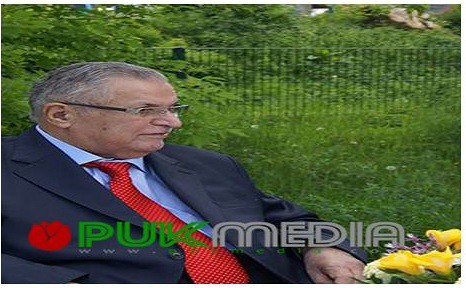
    ALSUMARIA notes that the Patriotic Union of Kurdistan announced that US forces were backing Iraqi forces on the ground in Nineveh Province.  The Patriotic Union of Kurdistan is one of the three main political parties in the KRG (the other two being the KDP and Goran).  It was created in 1975 and the head of it remains Jalal Talabai who served as President of Iraq from 2005 to December 2012.  He continued to hold office through 2014 but, in December of 2012, he suffered a stroke.   The incident took place late on December 17, 2012 (see the December 18, 2012 snapshot) and resulted in Jalal being admitted to Baghdad's Medical Center Hospital.    Thursday, December 20,2012, he was moved to Germany where he remained for approximately a year and a half, returning in July of 2014.


    During the time he was in Germany, the Talabani family insisted Jalal was fine while refusing to allow people to visit him -- including the then-Speaker of Parliament Osama al-Nujaifi.

    When the first wave of rumors that Talabani had either died or was permanently  incapacitated, took hold in May, Jalal was posed for a series of photos that appear to indicate his body was present but that was all.

    jalal


     The photos were compared to the film Weekend At Bernie's in Arabic social media.  (In the 1989 film, Andrew McCarthy and Jonathan Silverman play two men who drag the corpse of their boss, Bernie, around and pretend he's alive.)


    The Talabani family was down playing his condition.  By doing so, they allowed him to remain as president when he actually should have been removed from office because he was unable to carry out the duties of the president.


    Meanwhile, the US Defense Dept announced today:


    Strikes in Iraq
    Bomber, ground-attack, fighter and remotely piloted aircraft and rocket artillery conducted 20 strikes in Iraq, coordinated with and in support of Iraq’s government:

    -- Near Baghdadi, two strikes destroyed an ISIL bunker and suppressed an ISIL tactical unit.

    -- Near Huwayjah, a strike struck an ISIL oil compound.

    -- Near Beiji, a strike destroyed an ISIL mortar system.

    -- Near Fallujah, three strikes struck two separate ISIL tactical units and destroyed 10 ISIL fighting positions, two ISIL heavy machine guns, an ISIL light machine gun, an ISIL vehicle bomb, two ISIL rocket-propelled grenade systems and an ISIL recoilless rifle and denied ISIL access to terrain.

    -- Near Haditha, a strike struck an ISIL tactical unit and destroyed an ISIL vehicle.

    -- Near Kisik, a strike struck an ISIL foreign fighter weapons storage facility.

    -- Near Mosul, three strikes struck two separate ISIL tactical units and destroyed two ISIL vehicles.

    -- Near Qayyarah, five strikes struck three separate ISIL tactical units and an ISIL vehicle bomb-making facility and destroyed four ISIL assembly areas, two ISIL mortar systems, five ISIL vehicles, two ISIL tunnel systems, two ISIL bunkers and an ISIL command-and-control node.

    -- Near Ramadi, a strike struck a large ISIL tactical unit and destroyed an ISIL fighting position, an ISIL staging area, an ISIL weapons cache, an ISIL rocket propelled grenade system and an ISIL light machine gun.

    -- Near Sultan Abdallah, two strikes struck an ISIL tactical unit and destroyed eight ISIL rocket systems and an ISIL assembly area and suppressed a separate ISIL tactical unit.


    Task force officials define a strike as one or more kinetic events that occur in roughly the same geographic location to produce a single, sometimes cumulative, effect. Therefore, officials explained, a single aircraft delivering a single weapon against a lone ISIL vehicle is one strike, but so is multiple aircraft delivering dozens of weapons against buildings, vehicles and weapon systems in a compound, for example, having the cumulative effect of making those targets harder or impossible for ISIL to use. Accordingly, officials said, they do not report the number or type of aircraft employed in a strike, the number of munitions dropped in each strike, or the number of individual munition impact points against a target. Ground-based artillery fired in counterfire or in fire support to maneuver roles is not classified as a strike.


    In other violence, ALSUMARIA  reports 1 Iraqi soldier was shot dead in Yusufiya, a bombing in a Yousufiya cafe left an undisclosed number of people dead and wounded, a woman's headless corpse was discovered dumped in Basra, a Tuz Khurmatu shooting left one man and woman injured, a clash in the orchards of Mukhisa village (Diyala Province) left 2 Iraqi soldiers dead and three more injured, and the corpse of 1 Peshmerga was discovered in Kirkuk.


    The liberation or 'liberation' of Falluja continues.


    Iraqi forces seen in al-Khadrah, al-Resala & al-Yarmouk districts in Thursday


    And beyond the military maneuvers, what does 'liberation' look like?


    1. Shia Militias crimes عاجل فديو جديد مسرب يظهر قيام الحشد الشيعي الارهابي يعذب النازحين السنه العراقيين بوحشية


    Iraqi Sunni civilians displaced from Fallujah tortured by Shia Militias


    Iraqi Sunni civilians victims of Shia Militias airstrikes on


    الخبيث المخرج العراقي اوس بمسلسل الصق بالسني و بالزي الخليجي وجعل من الخليج ضحيه علما انهم مترفين!


    Shia Militias crimes اتحدى ان يذكر العراقيين السنه الذين يحرقهم الحشد الشيعي الارهابي بالشوارع


    Graphic pic Iraqi Sunnis civilians arrested ,Burned & killed by Shia militias without guilt in


    Shia Militias crimes عاجل من الفلوجه للقلوب القوية فقط الحشد الشيعي يقطع رؤوس اطفال اهل السنه علنا


    now Iraqi Sunni child killed by Shia Militias airstrikes on Painful OMG


    AFP notes, "Fallujah and the areas around it are Sunni Muslim while the paramilitary forces fighting alongside the government are dominated by Shia militias, some of which are supported by Tehran.
    Their involvement in the operation had raised fears the battle would see collective revenge against Sunni civilians and allegations of torture have mounted in recent days."  Suadad al-Salhy (MIDDLE EAST EYE) adds:


    Salama al-Khafaji, a member of the federal panel, told Middle East Eye that the 17 dead were among 20 people trying to reach a crossing point in Sijar.
    "A fighter from Hashd [Arabic name for Shia-dominated militias fighting near Fallujah] blocked their way and shot them. He surprised them and shot dead 17. The rest fled and survived."


    How else does 'liberation' look?


    The Norwegian Refugee Council released the following:

                             
    The situation for children, women and men fleeing Fallujah is desperate as humanitarian organisations are running out of food and water. “We have a humanitarian disaster inside Fallujah and another unfolding disaster in the camps," said Jan Egeland, Secretary General of the Norwegian Refugee Council (NRC).


    "Thousands fleeing the cross-fire after months of besiegement and near starvation deserve relief and care, but our relief supplies will soon be exhausted. The humanitarian community needs immediate funding to avoid a completely avoidable disaster on our watch,” said Jan Egeland, NRC's Secretary General.
    A total of 5,317 families have managed to flee to displacement camps in Anbar, Iraq, since 21 May.
    The route out of Fallujah is still extremely dangerous and NRC has recently confirmed reports of a father killed and more people injured by an explosive device just a few meters away from Al Salam intersection—the only route through which people trapped inside Fallujah’s city centre have managed to flee in the last days.
    More than 200 families are reportedly still stranded in the area waiting to be transported by Iraqi Security Forces to displacement camps.
    For those reaching the camps the situation is also dire. NRC is now able to provide just about 3 liters of drinking water per person per day in displacement camps—well below the minimum humanitarian standard of 10 liters.
    With temperatures expected to reach 50 degrees Celsius, this is an alarming situation that might lead to consumption of unsafe water, with serious public health consequences particularly for children, the elderly and people with chronic illnesses.
    “Make no mistake: There is absolutely nothing safe for civilians fleeing Fallujah. No safe exits, no safe passage, no safe haven without risking their lives. They risk being shot at, killed by explosive devices on the roads, or drowning while crossing the river. On top of that those who flee IS-controlled areas and manage to make it to safety will soon find out there is very little we can offer them: we are running out of food, drinking water and medical services,” said Egeland.
    NRC Emergency Coordinator, Diana Tonea, underlined the needs for people seeking shelter in the camps where we work: “Our emergency food parcels for the newly arrived are expected to last for just another two days for around 15,000 individuals,” Tonea said.
    Egeland said: “The current funding is running out as we are overwhelmed by the needs created by this crisis. We cannot let down innocent Iraqi women, children and men just at the moment when they escape from extreme hunger, brutal fighting and despair. This is a moment of truth for international solidarity with Iraqis who have been facing chronic displacement and untold suffering.”
    For further comments and information, please contact Karl Schembri, Regional Media Advisor (currently in Baghdad).
    Phone number: +964 7733 499 387
    Skype: karl.schembri


    Well today the United Nations issued the following:


    16 June 2016 – The low level of immunity coupled with poor hygiene conditions raises the risk of disease outbreaks, such as measles, in the Iraqi city of Fallujah, where more than 42,000 people have been displaced since the beginning of military operations in May.
    “The health situation inside and around Fallujah is deeply worrying,” said Ala Alwan, Regional Director for the Eastern Mediterranean of the World Health Organization (WHO) on his visit to Baghdad. “We are concerned about the low immunity status of children as no immunization services have been possible for the past two years,” he explained.
    Additionally, it is estimated that hundreds of pregnant women are trapped in Fallujah and are in urgent need of reproductive health services, Dr. Alwan noted.
    To detect and respond to any potential disease outbreaks, WHO is operating 13 early warning sites in Al-Anbar governorate and has provided health care providers with training on disease reporting and tablets to document and report possible outbreaks.
    Given the projected increase in humanitarian health needs in and around Fallujah, the challenge is immense, said Dr. Alwan.
    He met with high-level Iraqi officials to discuss the health needs of displaced persons, as well as those who remain trapped inside Fallujah, 60 km west of Baghdad.
    “The situation is extremely difficult and complex. Additional resources are required to provide urgent health assistance to thousands of families. WHO is disappointed by the inadequate levels of funding for the health sector, which is a major impediment to the response,” Dr. Alwan concluded.
    WHO has established a new primary health care centre with a local partner in Amiriyat Al Fallujah to serve the internally displaced population, including the nearly 3,250 families, or 19 500 persons, living in five camps for internally displaced persons (IDPs) and five informal settlements around the Bzibiz area.
    WHO has also supported the Ministry of Health and partners in distributing 15 tonnes of medicines, medical supplies and emergency kits to the civilians moving out of Fallujah to IDP camps in Ramadi, Khalidiya, and Amiriyat Al Fallujah areas. These shipments include a wide range of life-saving medicines for acute and chronic diseases, trauma kits and surgical supplies.
    WHO also continues to operate eight mobile medical clinics to provide urgently needed health services in Al-Anbar governorate; three of which were deployed to provide these services in Al Fallujah IDP camps.


    On the topic of refugees, ALSUMARIA notes MP Nayef al-Shammari (hails from Nineveh Province) announced today that 4 Iraqi refugees had died in a Syrian refugee camp.


    The US-installed prime minister of Iraq Haider al-Abadi can't/won't protect the civilians of Falluja or the refugees or basically anyone.


    In fact, lately, he can't even provide the most basic of basic services.  ALSUMARIA notes that the government in Babil Province is objecting to being granted only 13 hours a day of electricity -- this as dozens in al-Obeidi (east of Baghdad) took to the streets to protest plans to cut off their water.


    As Haider's many failures continue to breed political unrest, RUDAW reports:

    Iraq should be divided into three parts after the Islamic State (ISIS) militants are driven out of the country, said the head of the Kurdistan Regional Government's (KRG) Security Council in an interview.

    Masrour Barzani, who is also the son of KRG President Masoud Barzani, told Reuters during an interview that the lack of trust between Shias, Sunnis and Kurds is so very big that in order to bring back stability and peace to Iraq, the three parts must split or coexist in a confederation system.

    "Federation hasn't worked, so it has to be either confederation or full separation," Barzani said. "If we have three confederated states, we will have equal three capitals, so one is not above the other."


    The issue was raised at today's US State Dept press briefing moderated by spokesperson John Kirby:


    QUESTION: Masrour Barzani, the head of the KRG’s national security council, and the son of KRG President Masoud Barzani, has said that he believes Iraq should be divided into three separate entities once Islamic State is defeated. And he speaks partly about confederation, where there would be three capitals: one for the Shias, one for the Sunnis, and one for the Kurds, equal to one another, or just outright separation. Do you have any – think I know your views on this, but do you have any comment on this idea?


    MR KIRBY: I would just restate our views on this, in that – that have not changed. We continue to support an Iraq that’s federal, democratic, pluralistic, and unified. Been no change.

    QUESTION: Could I follow up on that?

    MR KIRBY: Sure.

    QUESTION: Because a year ago, I asked Mr. Barzani this very question. And he basically gave a very logical explanation as to why. I mean, the population does not speak Arabic; they basically function as an entity. I am certainly familiar with Kurdistan; I spent a lot of time there and so on. So why not support that kind of effort? It is likely to mitigate conflict rather than exacerbate it.


    MR KIRBY: Well, again, Said, nothing’s changed about our position and what we support going forward – as I said, a federal, democratic, pluralistic, and unified Iraq. And that’s been our policy; it’s going to remain our policy. And I don’t really – since I don’t see that policy changing, I find little value in sort of arguing the opposite case in terms of why wouldn’t we change the policy. We believe that this – that our view here of a unified Iraq going forward, the policy that we’ve espoused, is the best policy for the region, quite frankly.


    QUESTION: But is it true that since 1991 at least, Kurdistan has really functioned as almost an independent country, with your help and with your aid? So why this – I guess I don’t – incoherent policy in this very regard? I mean, on the one hand, you are supporting; you helped the Kurds form their almost semi-independence and autonomy, and on the other deny them that right.


    MR KIRBY: It started by helping them survive the atrocities put upon them by Saddam Hussein in the late ’80s and early ’90s. And as we – you fast forward to where we are now in the fight against [the Islamic State], even the assistance that flows to the Peshmerga in the north goes through Baghdad. So we don’t just say these words; we live by them and we work with these words as a foundation in terms of even the fight against [the Islamic State].
    It’s not about denying anybody anything. It’s about trying to help Iraq – especially right now – defeat this very deadly threat and continue to make the kinds of political, economic, even military reforms that they are in the effort of doing right now and helping them do that successfully. Because that’s what we believe will make for a strong, unified Iraq going forward, and we believe that a strong, pluralistic, unified Iraq is good for the region as well.


    QUESTION: Is your concern that maybe this division will also be replicated in the south, where you have this mega Shia region that is independent and closely tied to Iran, with very rich oil revenues and so on?


    MR KIRBY: No. We believe that – we believe the approach that we’re taking’s the right approach, period. And we’re not ascribing it as some sort of litmus test to one region of Iraq or the other. We want a whole, unified Iraq. Okay?


    "We believe."

    Strange, isn't it, that after all this time, the US government still doesn't give a damn what the Iraqi people might want, only what the US government wants.

    (That's not a call for splitting Iraq into three portions.  That's noting that such a decision should be a decision of the Iraqi people, not of the US government.)