Fran thinks its the best one she's seen. I really haven't seen a lot of Joni interviews -- it's a good interview -- I'm more of a print interview type person. But I'm glad Fran shared that because it is a good interview.
Staying with Joni -- thank Martha and Shirley, they read the bulk of the e-mails to common_ills@yahoo.com and they pulled a series of e-mails about Joni Mitchell for me -- Lorenzo e-mails that the Joni song that's been sticking in his head lately is "Passion Play (When All The Slaves Are Free)."
Magdalene is trembling
Like a washing on a line
Trembling and gleaming
Never before was a man so kind
Never so redeeming
Enter the multitudes
In Exxon blue
In radiation rose
Ecstasy
Now you tell me
Who you gonna get to do the dirty work
When all the slaves are free?
(Who're you gonna get)
I am up a sycamore
Looking through the leaves
A sinner of some position
Who in the world can this heart healer be
This magical physician
Enter the multitudes
In Exxon blue
In radiation rose
Misery
Now you tell me
Who you gonna get to do the dirty work
When all the slaves are free?
(Who're you gonna get)
Enter the multitudes
The walking wounded
They come to this diver of the heart
of the multitudes
Thy kingdom come
Thy will be done
I think that's a great song at any time but it really does apply to what's going on today, yes.
Laveda said that she won a radio triva contest in 1999 because she knew the chorus to Joni Mitchell's "Raised on Robbery."
She asks if Joni's ever helped me in something similar?
Actually, today there was this man at one of the speaking events who wanted to impress, I guess, so he quoted part of Rudyard Kipling's "If."
Because of Joni's recording, I knew the poem and managed to toss back, "If you can dream and not make dreams your master."
Lastly, Cecile e-mailed to say that this 1974 live video is her favorite live performance by Joni.
Closing with C.I.'s "Iraq snapshot:"
Tuesday, June 23, 2020. Cornavirus remains on the rise in Iraq, OXFAM
notes the way the disease is effecting Iraqi women, Turkey continues to
terrorize Iraq, UK military members whisper about a whitewash, and much
more.
The situation of Iraqi women was already precarious before the pandemic. Years of socio-economic and political instability have led to a deterioration in the rights, well-being and representation of women in Iraq. The results of the gender analysis confirm these worrying trends: women and girls are more at risk and withstand more pressure during this pandemic.
In Iraq, the coronavirus continues to claim lives. Football legend Ahmed Radhi is the most famous victim so far but he is one of many who have perished in the pandemic. Hiwa Shilani (KURDISTAN 24) reports:
On Monday, the Iraqi Ministry of Health and Environment announced
that 67 deaths and 1,808 new coronavirus infections had been recorded in
the country over the past 24 hours.
The ministry in a statement noted that 10,075 laboratory tests had been carried out over the last day, increasing the total number of medical tests conducted, since the disease first emerged in Iraq, to 455,316.
According to the ministry’s latest figures, there has been a total of 32,676 confirmed cases of COVID-19 in Iraq, including 1,167 deaths, 14,785 recoveries, with 16,724 cases still active, in which individuals are receiving medical care, with 222 of them in intensive care.
The Health Ministry of the Kurdistan Regional Government (KRG) also announced on Monday that there has been eight deaths over the past 24 hours in the Kurdistan Region, along with 299 new cases.
The ministry in a statement noted that 10,075 laboratory tests had been carried out over the last day, increasing the total number of medical tests conducted, since the disease first emerged in Iraq, to 455,316.
According to the ministry’s latest figures, there has been a total of 32,676 confirmed cases of COVID-19 in Iraq, including 1,167 deaths, 14,785 recoveries, with 16,724 cases still active, in which individuals are receiving medical care, with 222 of them in intensive care.
The Health Ministry of the Kurdistan Regional Government (KRG) also announced on Monday that there has been eight deaths over the past 24 hours in the Kurdistan Region, along with 299 new cases.
OXFAM has released a paper on the coronavirus in Iraq and they note, "This gender analysis shows that women in three sample areas of Iraq are
facing an increase in the burden of domestic work and caring
responsibilities, a heightened risk of domestic violence and
gender-based violence, and greater loss of economic livelihoods and
autonomy than men. They also face greater difficulties in accessing
healthcare and support services, due to restrictions on movement and
constrictive social norms, have limited decision-making power, and lack
the information on coronavirus itself which should help keep them safe." From the paper:
The situation of Iraqi women was already precarious before the pandemic. Years of socio-economic and political instability have led to a deterioration in the rights, well-being and representation of women in Iraq. The results of the gender analysis confirm these worrying trends: women and girls are more at risk and withstand more pressure during this pandemic.
Women bear most of the burden of cleaning
the house, preparing food, and taking care of children and sick people.
While women used to spend on average more than six hours a day
performing unpaid activities, their burden is likely to increase due to
the COVID-19 pandemic.
Women and girls face increased
risks of violence during the pandemic. With most incidents of
gender-based violence occurring in the home, the lockdown is likely to
put women at increased risk of violence. A majority of the interviewees
think that women and children are facing increased protection risks as a
result of the coronavirus pandemic. However, GBV survivors lack access
to the support they need.
Women have less access to
information on COVID-19 than men and are more likely to be unable to
protect themselves from the disease. While most respondents felt
suitable informed about COVID-19 guidelines, from watching TV or social
media, many felt they were unable to carry out the preventative measures
due to lack of resources to purchase the necessary items.
Women's
incomes and livelihoods are more affected by coronavirus prevention
measures than those of men. Between 15 and 30% of the women surveyed had
some form of economic activity before the crisis. Most of them were not
able to maintain this since the outbreak.
Access to
sexual and reproductive health services is extremely limited, putting
women at risk of mortality and morbidity that could otherwise be
avoided. A shortage of contraceptive supplies, fear of contracting the
virus in the health facilities and movement restrictions are among the
key factors impacting women's sexual and reproductive health during the
pandemic.
The current pandemic presents unprecedented challenges for women's health, livelihoods, safety and representation.
We
call on public authorities and humanitarian actors to protect women
from physical, psychological and economic violence, to enhance their
participation in the COVID-19 response and to provide gender-sensitive
interventions.
The report also notes "the shadow pandemic" taking place -- violence against women and girls:
According
to worldwide projections by UNFPA, '31 million additional cases of
gender-based violence can be expected to occur if the lockdown continues
for at least 6 months. For every 3 months the lockdown continues, an
additional 15 million extra cases of gender-based violence are
expected.'One in five Iraqi women and girls (21%) aged 15–49 were
subjected to physical domestic violence in 2008. In a 2012 survey, 73%
of women aged 15–45 reported that the perpetrator of domestic violence
was their husband, followed by their father (53%), then other family
members (43%). With most incidents of gender-based violence occurring
in the home, lockdown measures to prevent the transmission of
coronavirus are likely to put women at increased risk of violence.
Coronavirus was hardly the start of gendered discrimination and violence
in Iraq. Women across the country have been faced with increased
precarity due to years of conflict, socio-economic and political
instability.
Several high profile cases of gender-based violence in Iraq and the Kurdistan Region made headlines during the last several months, in line with news of a rise in domestic violence during coronavirus lockdowns around the globe.
According to the United Nations, 46 percent of married women in Iraq have survived some form of abuse at home, of which a third report physical and sexual assault.
A participant in Oxfam’s survey attributes the increase in domestic violence to men not being able to go work or socialize, leading to a spiral of economic hardship and frustration.
"Men have little patience. […] Before, when men got angry they could go out and after a while forget about the issue, but now they can't go out and [they] have to stay together, and that creates more tension,” one male respondent, aged 36, told Oxfam researchers.
Iraq does not have any specific laws to protect against gender-based violence, which disproportionately affects women.
Several UN agencies in April called on the Iraqi Parliament to rapidly adopt an Anti-Domestic Violence Law amid the reported rise in domestic violence during the COVID-19 lockdown.
Several high profile cases of gender-based violence in Iraq and the Kurdistan Region made headlines during the last several months, in line with news of a rise in domestic violence during coronavirus lockdowns around the globe.
According to the United Nations, 46 percent of married women in Iraq have survived some form of abuse at home, of which a third report physical and sexual assault.
A participant in Oxfam’s survey attributes the increase in domestic violence to men not being able to go work or socialize, leading to a spiral of economic hardship and frustration.
"Men have little patience. […] Before, when men got angry they could go out and after a while forget about the issue, but now they can't go out and [they] have to stay together, and that creates more tension,” one male respondent, aged 36, told Oxfam researchers.
Iraq does not have any specific laws to protect against gender-based violence, which disproportionately affects women.
Several UN agencies in April called on the Iraqi Parliament to rapidly adopt an Anti-Domestic Violence Law amid the reported rise in domestic violence during the COVID-19 lockdown.
No surprise that the Anti-Domestic Violence Law has yet to be adopted, nothing seems to take place in Iraq.
How
bad is the corruption? Listen to MP Majida al Tamimi explain it.
"Even the traffic fines," she says, "how much of this do you think
actually goes towards the budget?"
The corruption never ends and the Iraqi people never have their needs met -- not even basic needs like water they can drink. Azhar Al-Ruabie (AL-MONITOR) reports:
Iraq's third-largest city, Basra, was
once called “Venice of the East” due to the numerous water canals and
bridges meandering throughout the entire city. This description is no
longer true, as the Shatt al-Arab ("Stream of the Arabs") and its
branches have become polluted with algae, bacteria, chemical toxins, and
waste products from humans, hospitals and factory residuals.
On June 1, Iraq’s Ministry of Water
Resources announced that it has prepared a comprehensive plan to tackle
the problem of salinity and environmental pollution in Basra province.
The plan covers several measures, including building a dam in northern
Basra to prevent river water from becoming further salinated.
Shatt al-Arab is a confluence of the
Tigris and Euphrates rivers. But nowadays, what is flowing into Shatt
al-Arab comes mostly from the Tigris River. This is because both rivers
are witnessing decreasing rainfall, high temperatures over the past
couple of years and the construction of dams along the two river
streams. In turn, this has lowered Shatt al-Arab's share of water and
polluted it with multiple contaminates.
Despite Basrawis living in a
hydrocarbon-rich province, residents since 2011 have come together on
the streets and in front of government buildings to demand rights such
as clean water, health care, electricity, jobs, an end to corruption,
and an end to foreign interference from the United States and Iran.
Clean water was and still is their major demand, but no tangible
measures have been taken.
In September 2018, Basrawis took to the streets to protest the government when more than 118,000 people in Basra suffered poisoning
due to contaminated water. Health authorities and the High Commission
for Human Rights announced that those admitted to hospitals in 2018 were
experiencing severe diarrhea, vomiting, nausea and high fever.
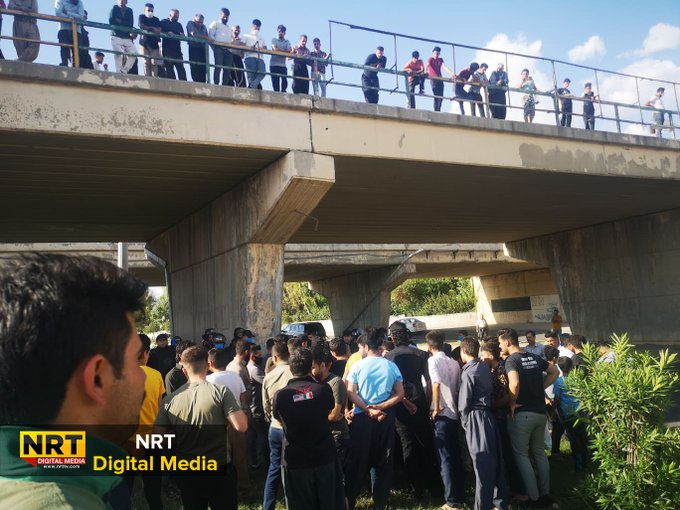
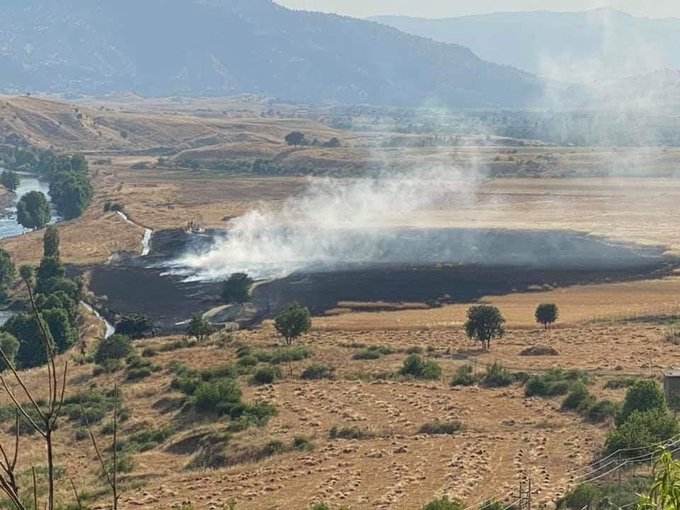
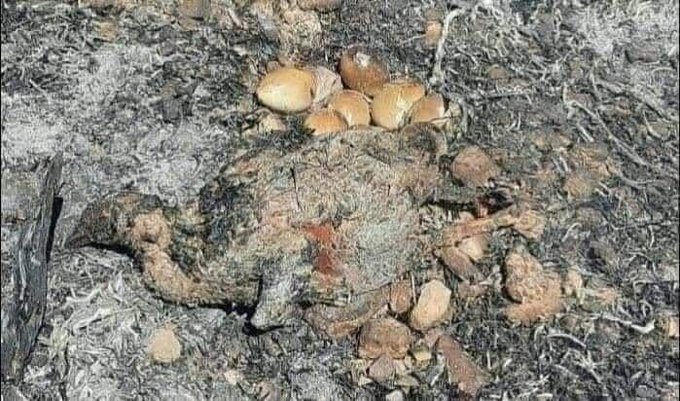
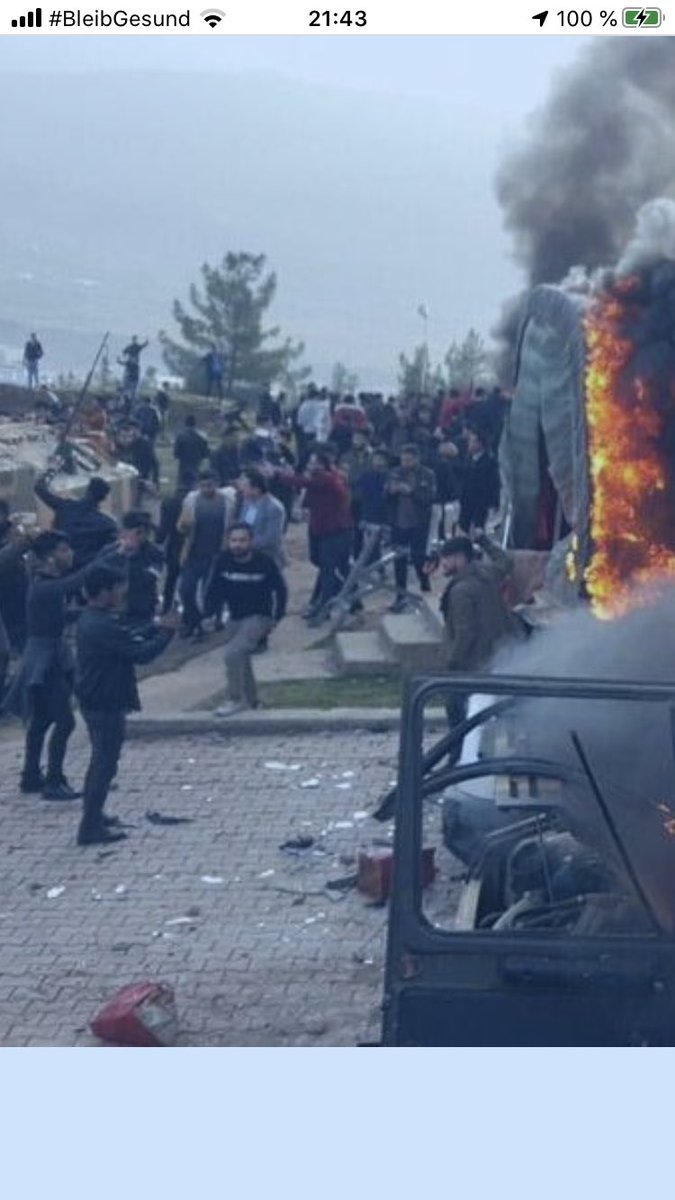
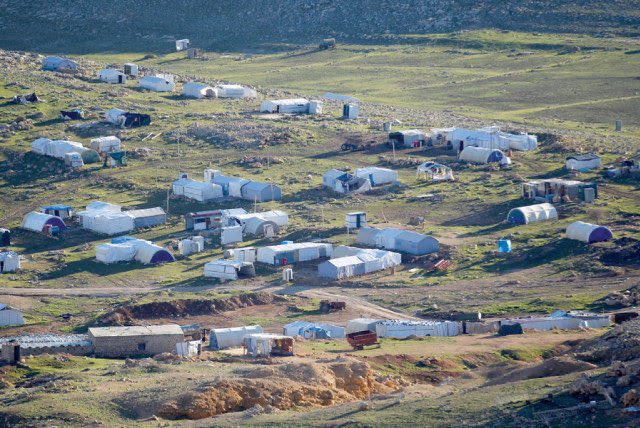
According to sources, Turkey has carried out air raids in the autonomous KRI due to claims of existence of PKK rebels in Iraq, but the victims of the past week were displaced Yazidis returning to Sinjar, displaced Assyrian Christians in Zakho, and Kurdish civilians in Dohuk/Erbil
12:16 AM · Jun 23, 2020
In other news, Michael Selby-Green (DAILY MAVERICK) reports:
Senior army commanders pressured a
junior officer to stop an internal investigation into a British war
crime in Iraq, writing it off as an “unfortunate incident in war”, a
former member of the Royal Military Police’s Special Investigations
Branch (SIB) has told Declassified UK.
Another former senior SIB officer has said that British paratroopers should have been convicted of killing another Iraqi but they escaped punishment when a trial collapsed after failings in an SIB investigation.
Declassified UK has spoken to four former soldiers in the SIB, which deployed to the Iraq conflict in 2003 alongside conventional troops, ready to investigate serious incidents involving UK forces, including potential British war crimes. None wanted to be named.
Decisions were made not to send sufficiently qualified senior investigating officers to command the SIB during the invasion and early tours, the former SIB members said. This made it easier for the army’s senior command to influence the investigations into abuses and created a backlog of unresolved cases, they say.
“I did not feel qualified to deal with an investigation of this scale and did not have sufficient resources,” one of the unit’s leaders later said. The SIB should have sent their “A-team” to Iraq, but instead dispatched officers who were “completely unqualified” to lead serious investigations in a theatre of war, a former senior SIB officer told Declassified UK.
“They sent the wrong people… And to this day I don’t know why,” the source said. “The more I think about it, the more mad it becomes.”
The former senior SIB officer said that one would “absolutely 100%” expect to see more UK military prosecutions coming out of Iraq. He added, “You look at the amount of people who were prosecuted – virtually none. You know, how many people got away with murder?”
Another former senior SIB officer has said that British paratroopers should have been convicted of killing another Iraqi but they escaped punishment when a trial collapsed after failings in an SIB investigation.
Declassified UK has spoken to four former soldiers in the SIB, which deployed to the Iraq conflict in 2003 alongside conventional troops, ready to investigate serious incidents involving UK forces, including potential British war crimes. None wanted to be named.
Decisions were made not to send sufficiently qualified senior investigating officers to command the SIB during the invasion and early tours, the former SIB members said. This made it easier for the army’s senior command to influence the investigations into abuses and created a backlog of unresolved cases, they say.
“I did not feel qualified to deal with an investigation of this scale and did not have sufficient resources,” one of the unit’s leaders later said. The SIB should have sent their “A-team” to Iraq, but instead dispatched officers who were “completely unqualified” to lead serious investigations in a theatre of war, a former senior SIB officer told Declassified UK.
“They sent the wrong people… And to this day I don’t know why,” the source said. “The more I think about it, the more mad it becomes.”
The former senior SIB officer said that one would “absolutely 100%” expect to see more UK military prosecutions coming out of Iraq. He added, “You look at the amount of people who were prosecuted – virtually none. You know, how many people got away with murder?”
The following sites updated:
-
-
The Global Reset: Unplugged6 hours ago
-
-
Bob Dylan9 hours ago
-
Mars10 hours ago
-
Joshua Jackson10 hours ago
-
Howie10 hours ago
-
-
Free speech10 hours ago
-
What makes YOUTUBE think it knows me?10 hours ago
-
-
Joel Schumacher11 hours ago
-
Tom Petty's trashy family12 hours ago
-
-
-
-
-
-